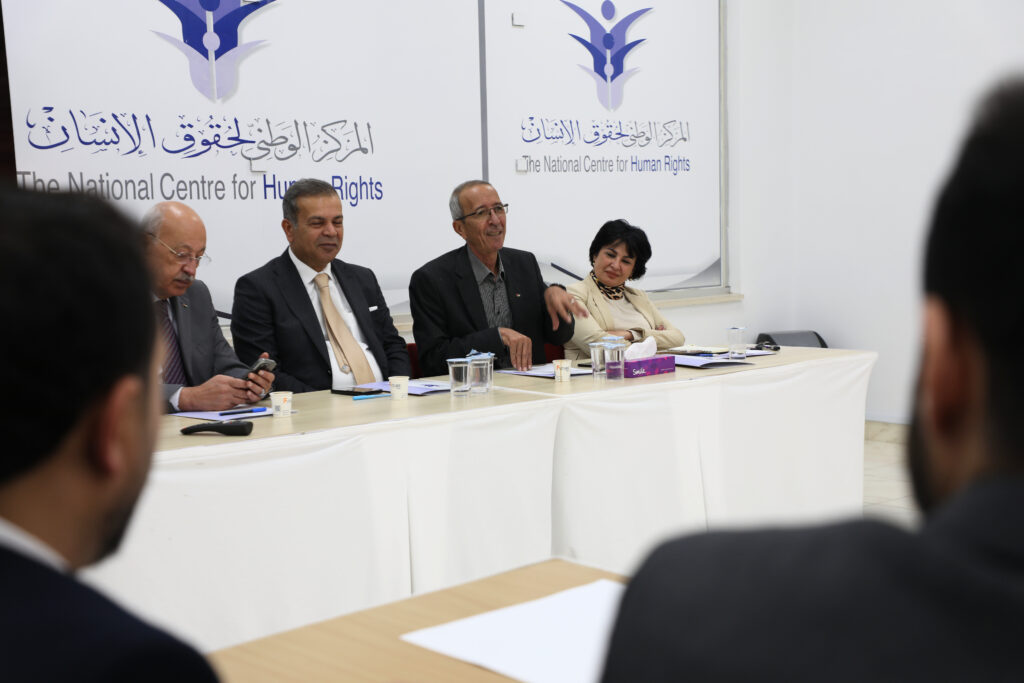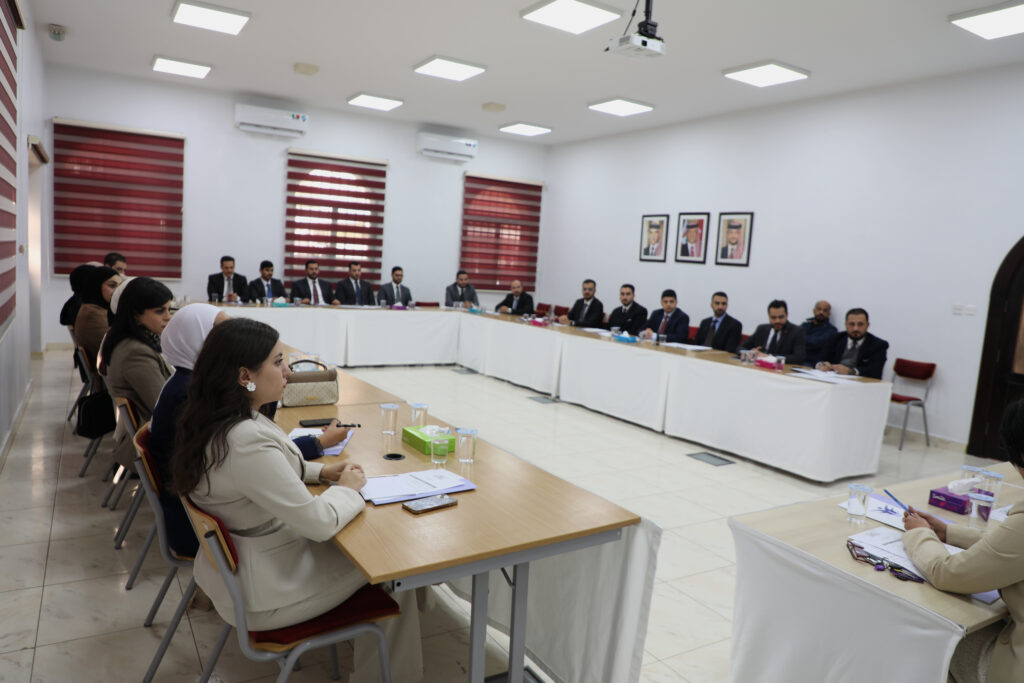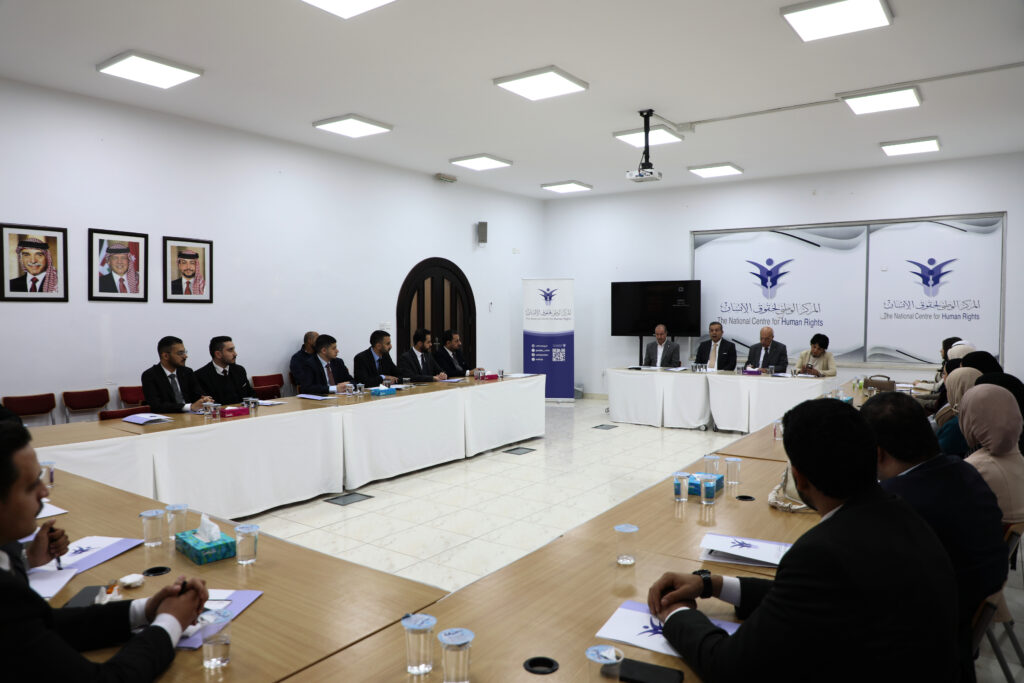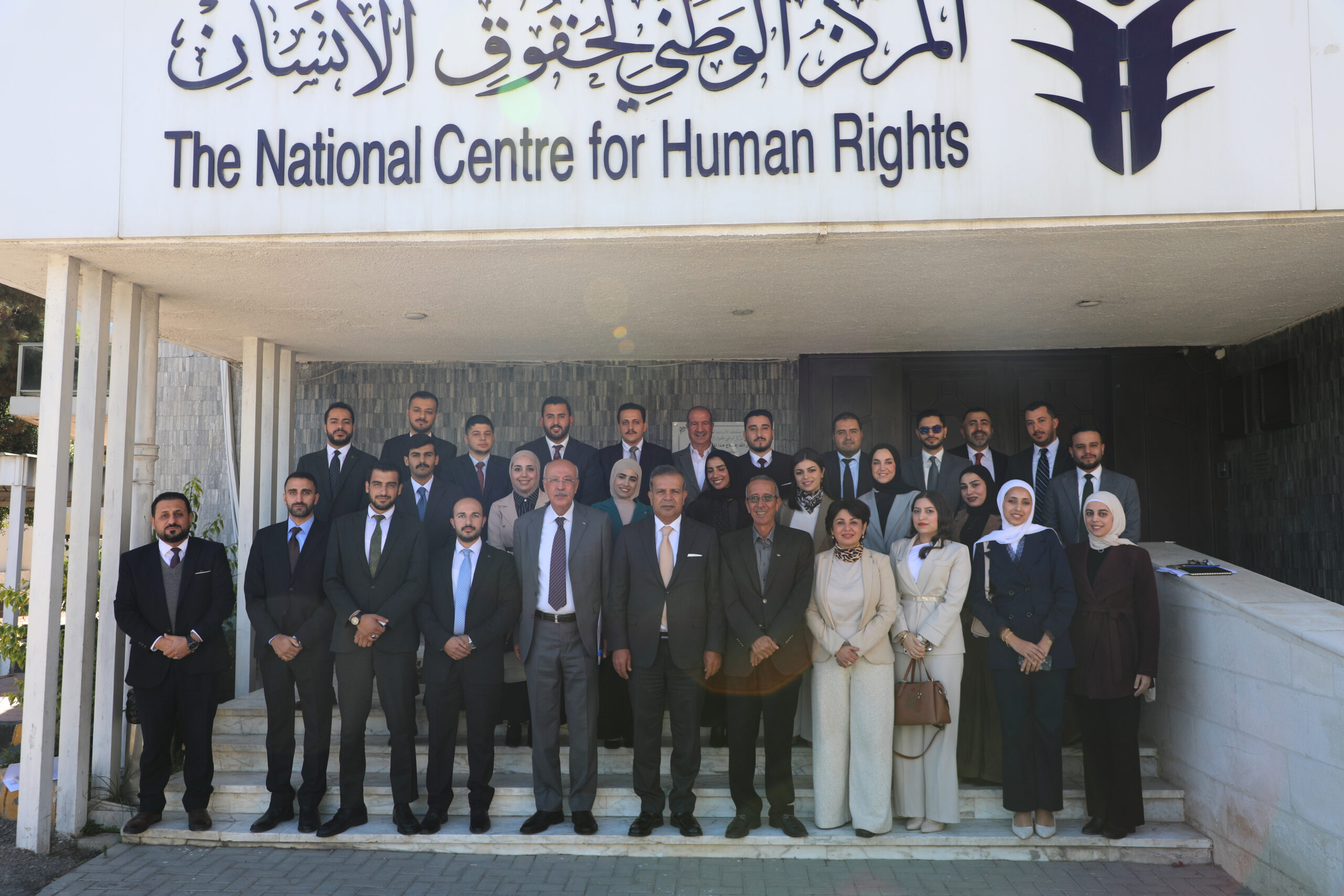
Amman – The National Centre for Human Rights (NCHR) welcomed a delegation of students from the Judicial Institute of Jordan on Wednesday, 18 November 2026, for a visit aimed at familiarising them with the Centre’s mandate, responsibilities and working mechanisms in protecting and promoting human rights, as well as its role in monitoring and following up on the human rights situation in the Kingdom.
Vice-Chairperson of the NCHR Board of Trustees, lawyer Khaldoun Al-Nsour, welcomed the visiting delegation and highlighted the importance of strengthening engagement between the Centre and judicial institutions. He emphasised the value of connecting legal knowledge with the practical application of human rights principles and reinforcing the judiciary’s role in safeguarding rights and freedoms and upholding the rule of law.
Commissioner-General for Human Rights Jamal Al-Shamayleh provided an overview of the Centre’s establishment, legal status, independence, and the responsibilities and powers entrusted to it under the legislation governing its work. He also outlined its role as an independent national institution mandated to protect and promote human rights in accordance with relevant international principles and standards.
NCHR Board of Trustees member Dr. Mohammad Al-Tarawneh addressed the pivotal role of the judiciary in protecting and promoting human rights, highlighting the importance of judicial independence and fair trial guarantees in safeguarding fundamental rights and freedoms and upholding the rule of law. He also emphasised the importance of judges’ familiarity with national and international human rights standards and their application in judicial practice to strengthen access to justice and the protection of human dignity. He further highlighted the complementary roles of the judiciary and national human rights institutions in strengthening the overall human rights protection framework.
Commissioner for Promotion Nisreen Zureiqat presented the Centre’s efforts to promote a culture of human rights through awareness-raising, training and capacity-building programmes, research and studies, and initiatives designed to strengthen public understanding of fundamental rights and freedoms. She also highlighted the NCHR’s role in submitting proposals and recommendations concerning relevant legislation and policies.
Lawyer Issa Al-Maraziq delivered a presentation on the Centre’s human rights protection mechanisms, including receiving and following up on complaints, monitoring and documentation, conducting field visits to correctional and rehabilitation centres and places of detention, following up on potential violations and concerns, and submitting recommendations to the competent authorities.
The visit included an interactive discussion on the complementary roles of national human rights institutions and the judiciary, the importance of applying human rights knowledge in judicial practice, and the Centre’s approaches to addressing human rights concerns. Students also had the opportunity to raise questions about the NCHR’s mandate and working procedures.
The visit forms part of the NCHR’s efforts to strengthen cooperation with judicial and academic institutions and contribute to the capacity-building of legal and judicial professionals, thereby supporting the effective protection of rights and freedoms, access to justice, the rule of law and respect for human dignity.