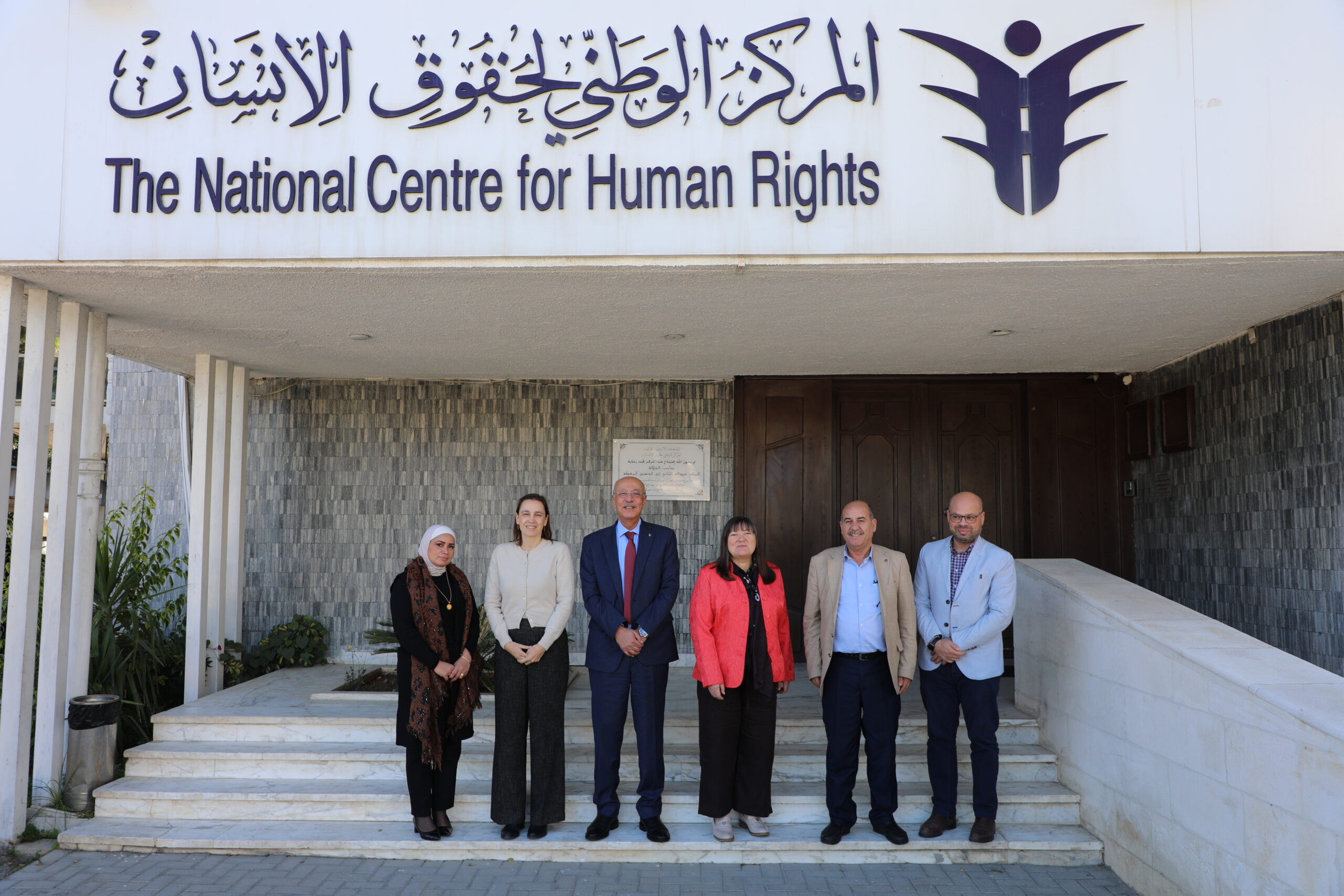
Amman – The National Centre for Human Rights (NCHR) received a delegation from the European Union Election Follow-up Mission to Jordan at its headquarters in Amman on Tuesday. The delegation included Anne Marlborough, Team Leader and Legal Expert, and Nadine Hass, Electoral Expert and Consultant to the Mission. Discussions focused on progress in electoral reform and recommendations arising from the monitoring of Jordan’s 2024 parliamentary elections.
The meeting took place as part of the EU Election Follow-up Mission’s activities aimed at assessing progress in implementing the 18 recommendations issued by the European Union Election Observation Mission following the 2024 parliamentary elections, as well as reviewing national efforts to strengthen the electoral environment.
During the meeting, NCHR Commissioner General Jamal Al-Shamayleh emphasized the importance of cooperation and the exchange of expertise with the EU Mission. He highlighted the Centre’s role in monitoring electoral processes from a human rights perspective, in line with international standards relating to political rights and participation in public affairs.
During the meeting, Issa Al-Hawawsheh, Head of the Fundamental Rights and Freedoms Unit at the NCHR and the lawyer responsible for the Centre’s elections portfolio, presented an overview of the Centre’s methodology for monitoring the 2024 parliamentary elections, along with the key findings and recommendations outlined in its report.
He also highlighted areas of convergence and alignment between the Centre’s recommendations and those of the EU Election Observation Mission, with a view to improving the electoral environment and strengthening safeguards for integrity and transparency.
For her part, Rasha Nakai, Head of the Projects Unit at the NCHR, welcomed enhanced cooperation and coordination with the EU Mission. She emphasized the importance of exchanging expertise and information and drawing on monitoring and evaluation findings to advance shared objectives of supporting free and fair elections and strengthening political participation.
Both sides underscored the importance of building on independent monitoring findings and evidence-based recommendations to support improvements to the electoral process, enhance public confidence in elections, and promote international standards relating to political rights and participation in public affairs.
At the conclusion of the meeting, both sides agreed to maintain communication and continue exchanging expertise and information on matters of mutual interest, with a view to strengthening cooperation in election monitoring and following up on recommendations aimed at improving the electoral environment.