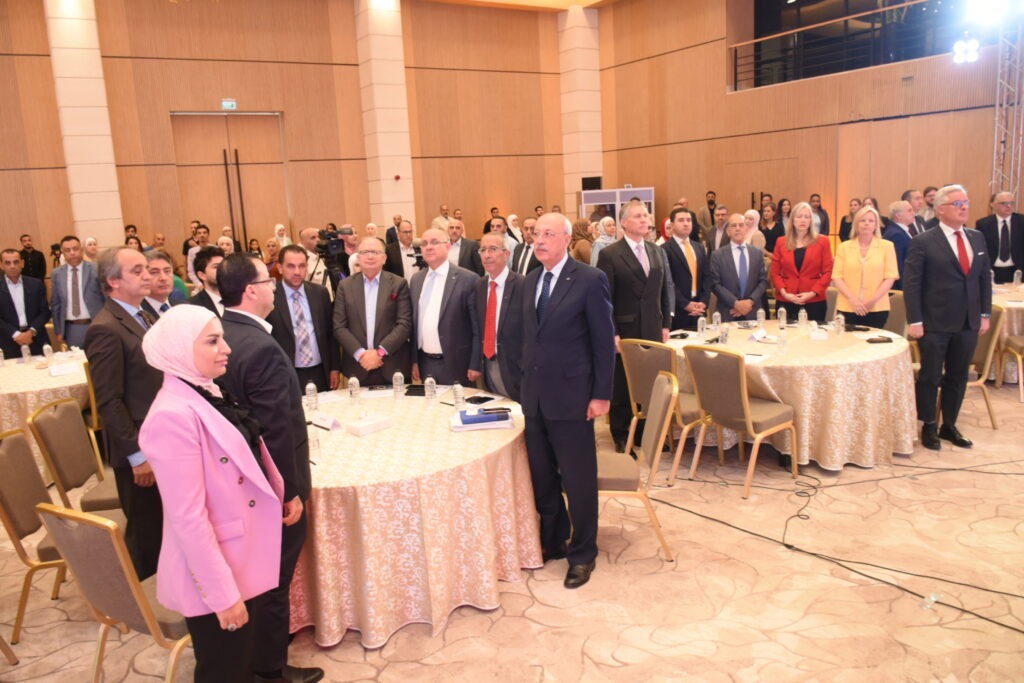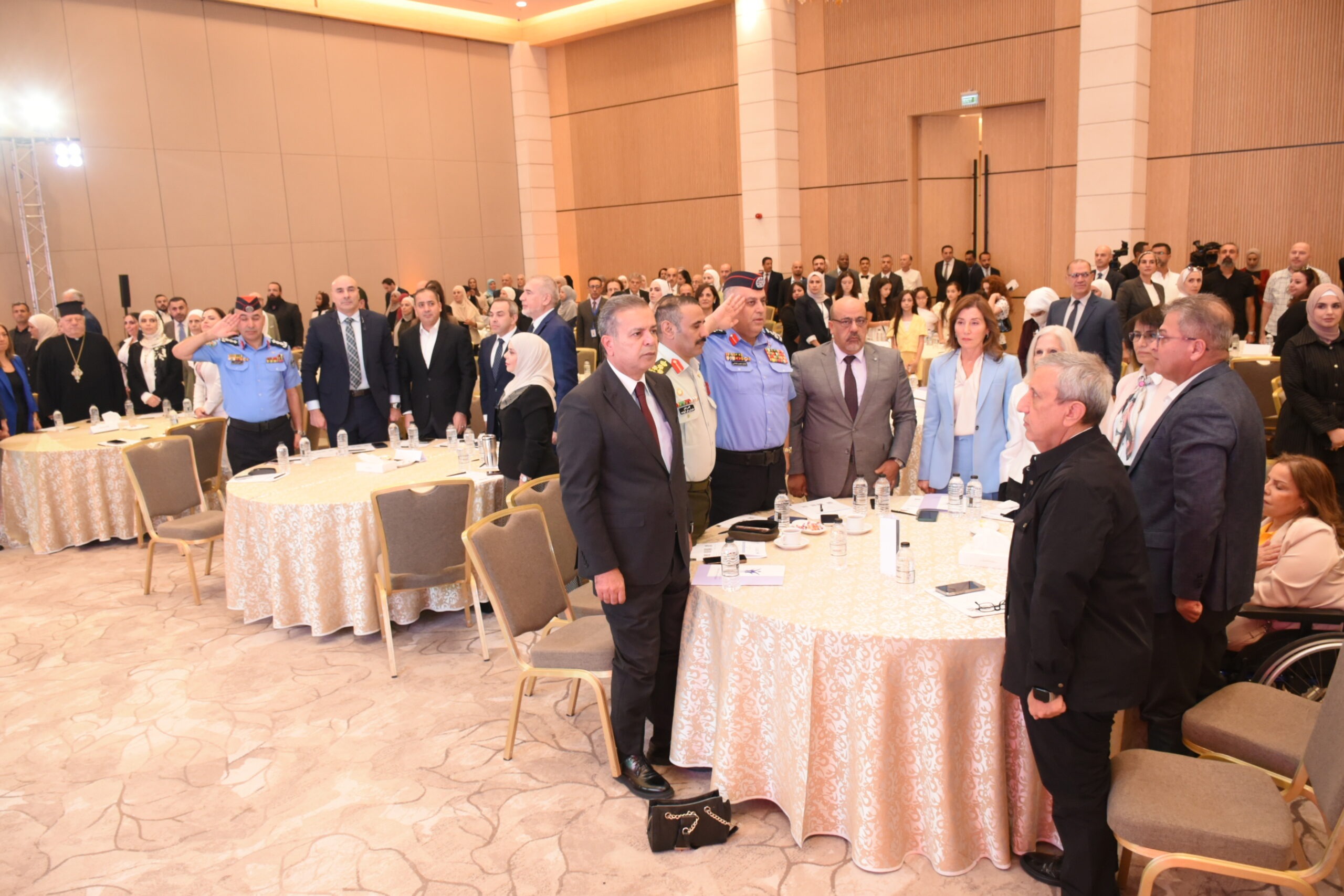
The National Centre for Human Rights (NCHR) today launched its 22nd Annual Report on the State of Human Rights in the Kingdom for 2025, during an official event attended by representatives of the three branches of government—the legislative, executive, and judicial authorities—as well as representatives of official institutions, law enforcement agencies, civil society organizations, universities, the youth sector, media outlets, and a number of experts, activists, and individuals engaged in the field of human rights.
The report represents the culmination of the Centre’s sustained institutional work throughout 2025, carried out in accordance with its legal mandate and national role in the protection and promotion of human rights. This work encompassed field monitoring, receiving and following up on complaints, analyzing legislation, policies, and practices, and engaging with relevant stakeholders, leading to the formulation of evidence-based recommendations aimed at strengthening protection and prevention mechanisms and consolidating a human rights-based approach.
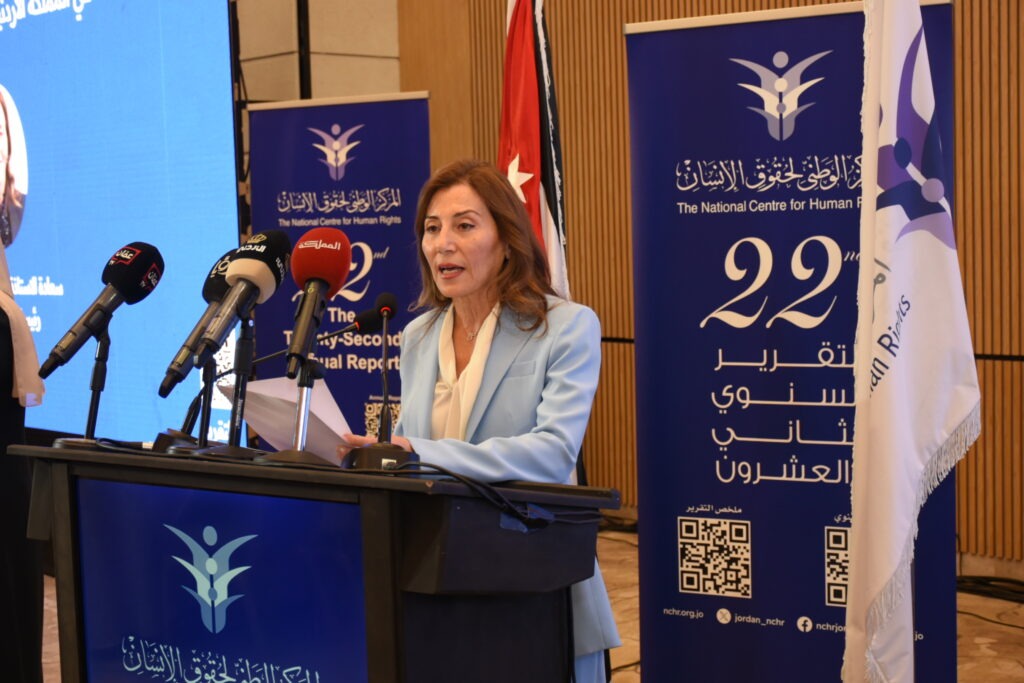
In her opening remarks, Chairperson of the Board of Trustees Samar Al-Haj Hassan underscored the national value of the Centre’s annual reports, saying: “The importance of the National Centre for Human Rights’ reports lies in their role as a national document that diagnoses the state of human rights, highlights positive developments, identifies the most significant challenges, and leads to specific recommendations that are measurable, actionable, and subject to follow-up.”
She added that the 22nd Annual Report continues the Centre’s established approach by presenting a comprehensive human rights perspective that can contribute to reviewing and amending legislation and to developing public policies and practices. She also highlighted the Centre’s new, systematic approach to following up on annual-report recommendations with relevant authorities through defined timeframes and measurable indicators.
This year’s report contains 154 recommendations based on the findings of the Centre’s monitoring, analysis, and follow-up activities. The recommendations cover civil, political, economic, social, and cultural rights, as well as the rights of groups most in need of protection. They focus on proposing actionable measures that can be followed up on and further developed in cooperation with relevant stakeholders, thereby supporting a shift from identifying challenges toward advancing responses and solutions and achieving tangible and sustainable impact.
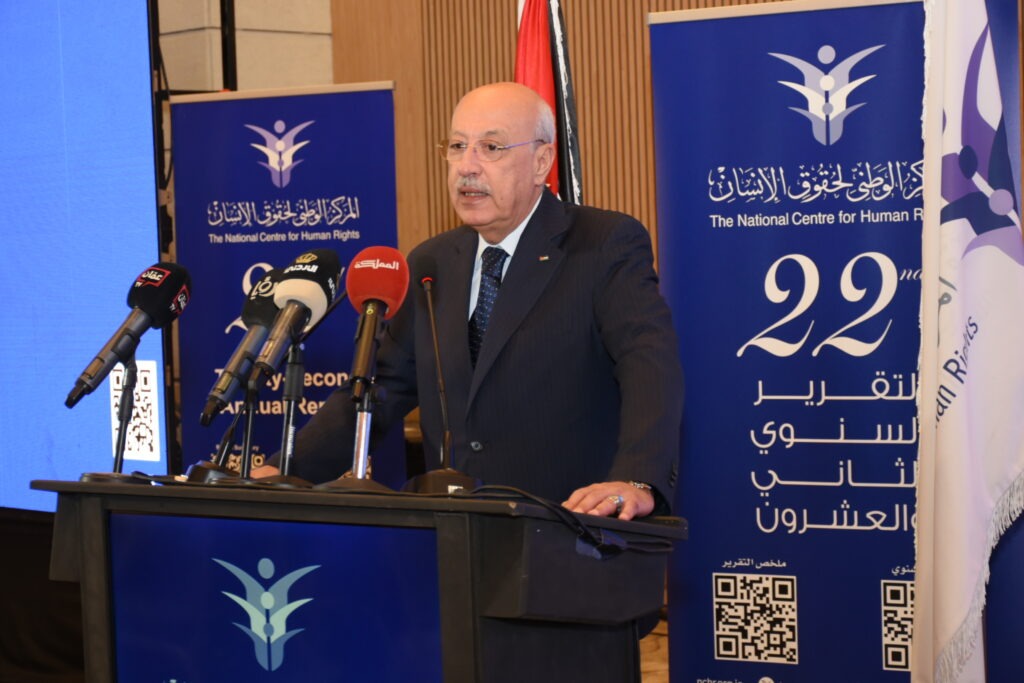
For his part, Commissioner General Jamal Al-Shamayleh said the report presents a balanced assessment of human rights conditions in 2025, capturing both persistent structural challenges and tangible reform developments. “Reading the indicators in this report leads us to a fundamental conclusion: the next phase requires moving from fragmented sectoral interventions to integrated policies for protection and empowerment, based on clear performance and measurement indicators and linking legislation, public policy, and implementation in order to achieve sustainable and measurable impact,” he said.
Al-Shamayleh added: “Protecting human rights is not the responsibility of a single entity; it is a shared national responsibility that requires complementarity among state institutions, civil society, the private sector, and citizens, as well as continuous dialogue on ways to advance the human rights system in the Kingdom.”
The Commissioner General also pointed to key issues reflected in the report, including civil, economic, social, and cultural rights, as well as the rights of groups most in need of protection, including digital rights, climate reporting, the business sector, and the human rights.
The Centre stressed the importance of partnership and coordination among national stakeholders in addressing the recommendations contained in the report and establishing clear mechanisms for their follow-up. It reaffirmed its commitment to continued engagement with relevant stakeholders, providing the necessary human rights expertise, and monitoring progress in a manner that contributes to strengthening the protection of human rights and ensuring their enjoyment without discrimination.
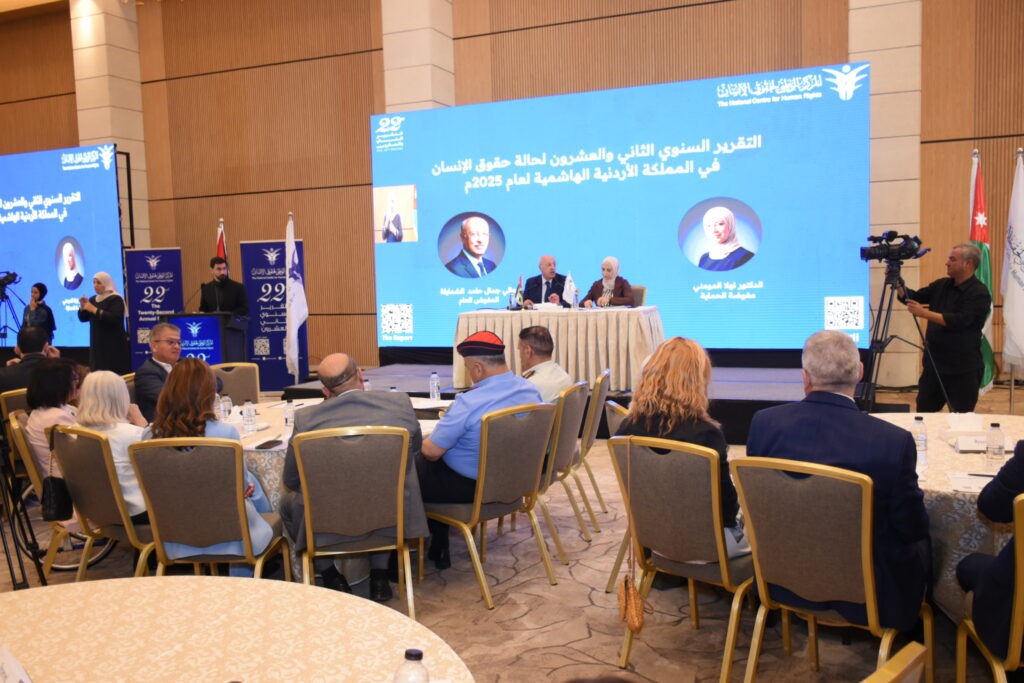
Following the launch ceremony, a press conference was held during which Commissioner General Jamal Al-Shamayleh and Commissioner for Protection Dr. Nahla Al-Momani responded to questions and inquiries from the media regarding the report’s key findings, indicators, and recommendations, its preparation methodology, and the mechanisms for following up on its recommendations.
As part of its efforts to broaden engagement and ensure wider participation across the Kingdom, the Centre will extend the launch of its 22nd Annual Report to the northern and southern regions of Jordan through dedicated events bringing together relevant stakeholders and local communities. These events will provide a platform for presenting and discussing the report’s key findings and recommendations, while promoting dialogue on human rights priorities and challenges from a local perspective and ensuring that the perspectives and experiences of communities across the Kingdom inform the Centre’s ongoing work.
The Centre emphasized that the publication of the Annual Report represents a milestone within an ongoing process of monitoring, follow-up, evaluation, and engagement with relevant stakeholders, with the aim of contributing to the development of legislation, policies, and practices and strengthening a more effective national framework for the protection of human rights and the prevention of human rights violations.
The Centre noted that the full version of the 22nd Annual Report on the State of Human Rights in the Kingdom for 2025, together with its annexes, is available on its website.