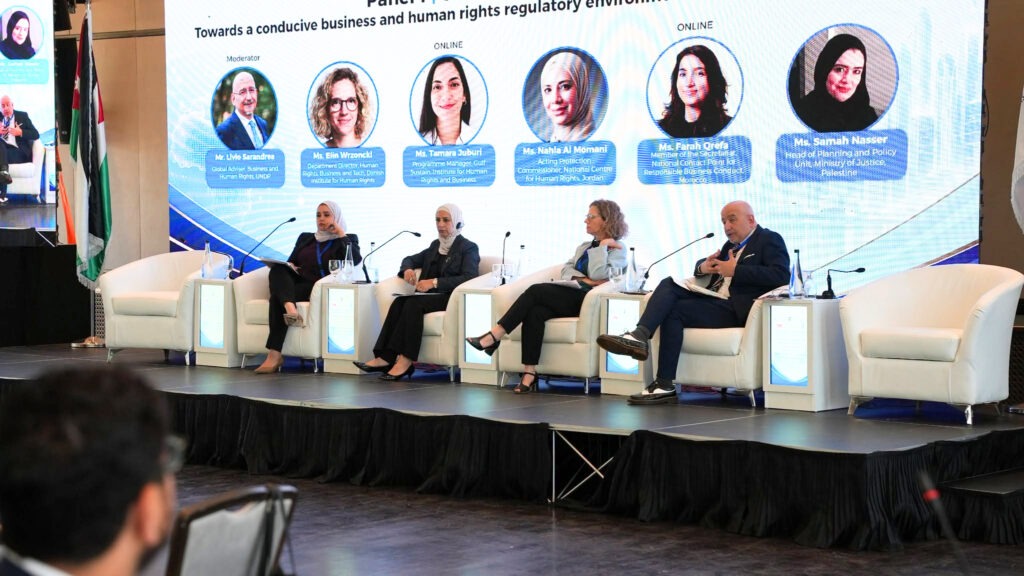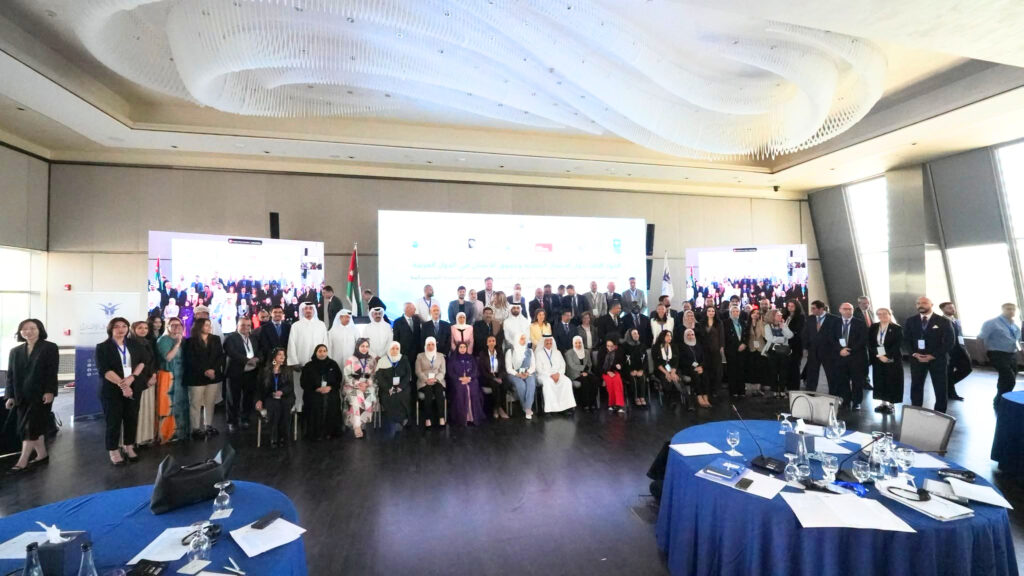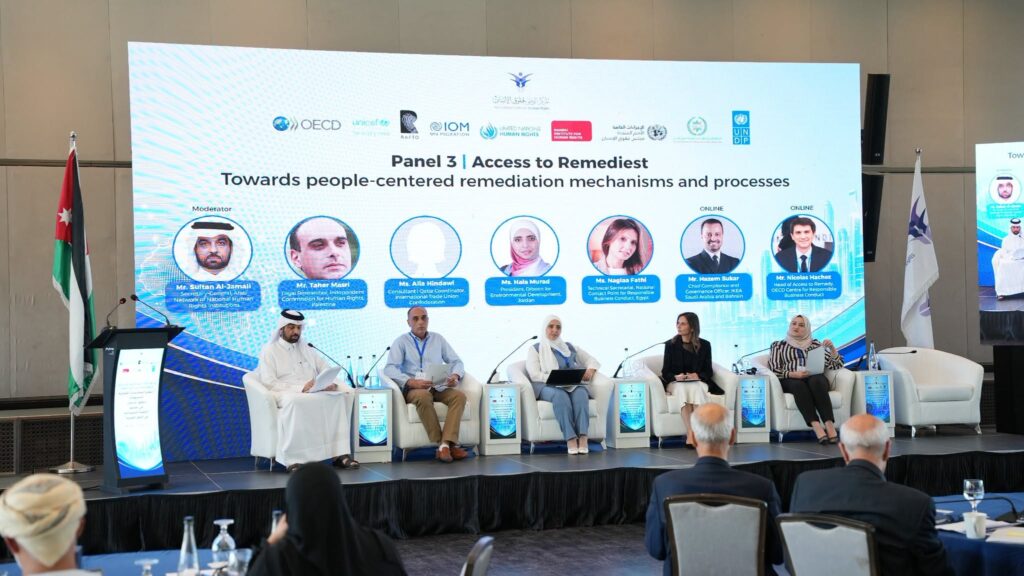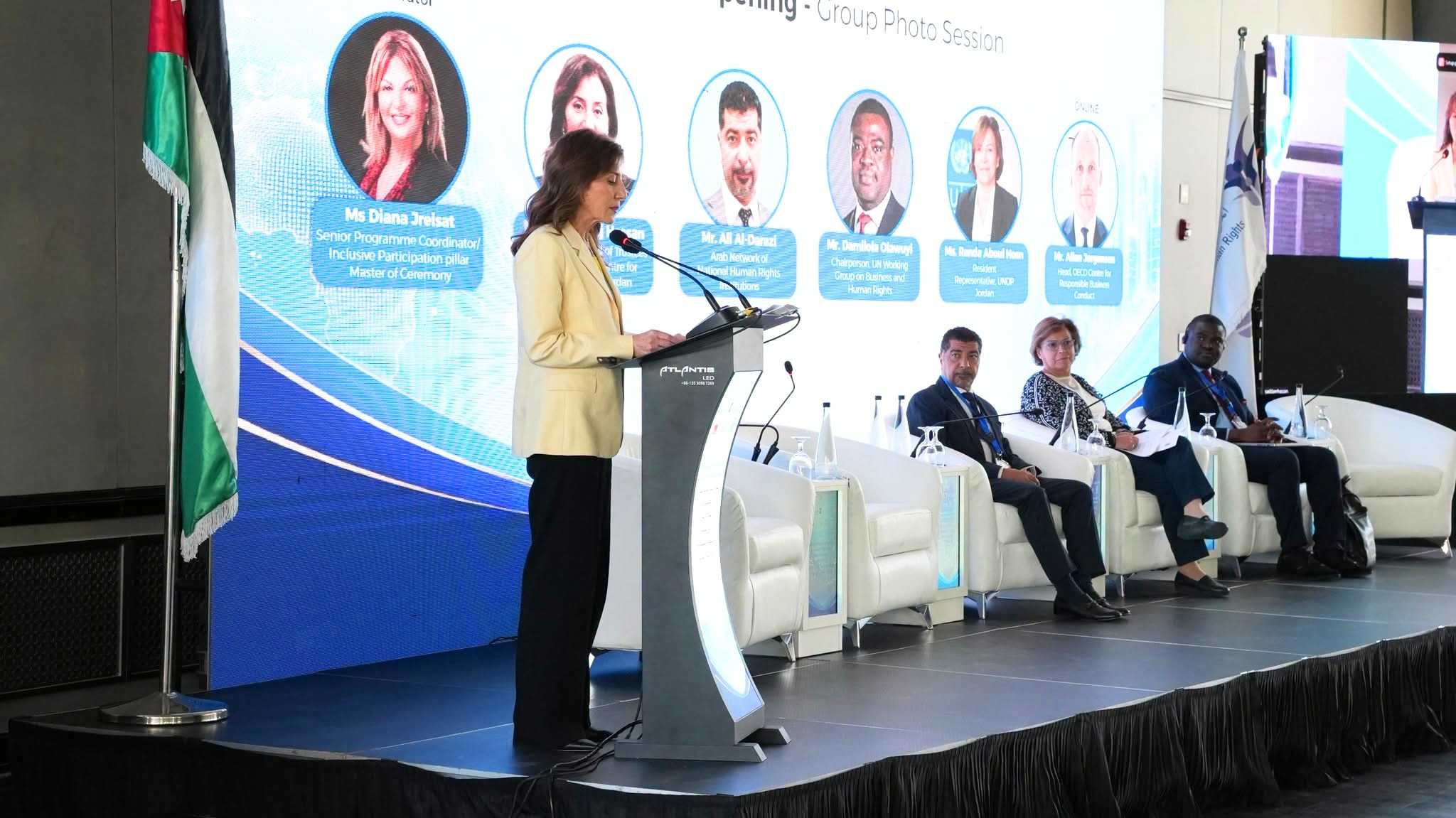
Amman – The Third Regional Forum on Business and Human Rights in the Arab States officially opened today, Wednesday. The forum is hosted by the National Centre for Human Rights (NCHR) in the Hashemite Kingdom of Jordan, in cooperation with the United Nations Development Programme (UNDP), the Office of the United Nations High Commissioner for Human Rights (OHCHR), the United Nations Children’s Fund (UNICEF), the International Organization for Migration (IOM), the Organization for Economic Co-operation and Development (OECD), the Danish Institute for Human Rights, the Rafto Foundation, the Arab Network for National Human Rights Institutions (ANNHRI), and in coordination with the United Nations Working Group on Business and Human Rights.
In her opening remarks, the Chairperson of the Board of Trustees of the National Centre for Human Rights emphasized that the forum is being held at a time of growing regional and international interest in business and human rights, coinciding with the fifteenth anniversary of the adoption of the United Nations Guiding Principles on Business and Human Rights and the fiftieth anniversary of the OECD Guidelines for Multinational Enterprises on Responsible Business Conduct.
She noted that the United Nations Guiding Principles established a balanced global framework based on three main pillars: the State duty to protect human rights, the corporate responsibility to respect human rights, and access to effective remedy. She further stressed that international expectations are increasingly focused on strengthening the contribution of businesses to sustainable development and on preventing and addressing adverse human rights impacts throughout their operations and value chains.
She underscored that respect for human rights is no longer merely a voluntary commitment or an ethical responsibility; rather, it has become a fundamental element of business sustainability, an indicator of good governance, and a key factor in attracting investment and enhancing the competitiveness of both countries and companies.
She added that the Arab region is facing growing challenges related to conflicts, migration, climate change, digital transformation, and disruptions in global supply chains, making it imperative to promote a sustainable development model that places human dignity at the center of economic and investment policies. This reflects the understanding that economic development and human rights are complementary and inseparable.
At the national level, the Chairperson reviewed Jordan’s efforts within the broader framework of its comprehensive modernization reforms, highlighting the completion of the National Baseline Assessment on Business and Human Rights. The assessment represents an important step in evaluating the alignment of national legislation, policies, and practices with relevant international standards and in identifying priorities for developing a national framework and a National Action Plan in this field.
She also emphasized the importance of viewing human rights due diligence as a strategic investment in sustainability, trust-building, and competitiveness. In this context, she referred to national efforts aimed at promoting the principles of responsible business conduct, including the work of the National Team on Responsible Conduct of Multinational Enterprises, chaired by the Ministry of Investment and comprising the National Centre for Human Rights and other relevant stakeholders.
Over the course of two days, the forum will discuss a number of key issues related to business and human rights, including human rights due diligence, responsible investment, access to remedy, digital transformation and artificial intelligence, conflict-affected contexts, workers’ rights, and sustainable supply chains.
The forum is expected to conclude with the adoption of the **Amman Declaration on Advancing Responsible Business Practices in the Arab States Region**, which will include a set of commitments and recommendations aimed at strengthening the implementation of international standards on business and human rights, enhancing regional cooperation, and developing national policies and practices that contribute to sustainable development and the protection of human rights across the Arab region.