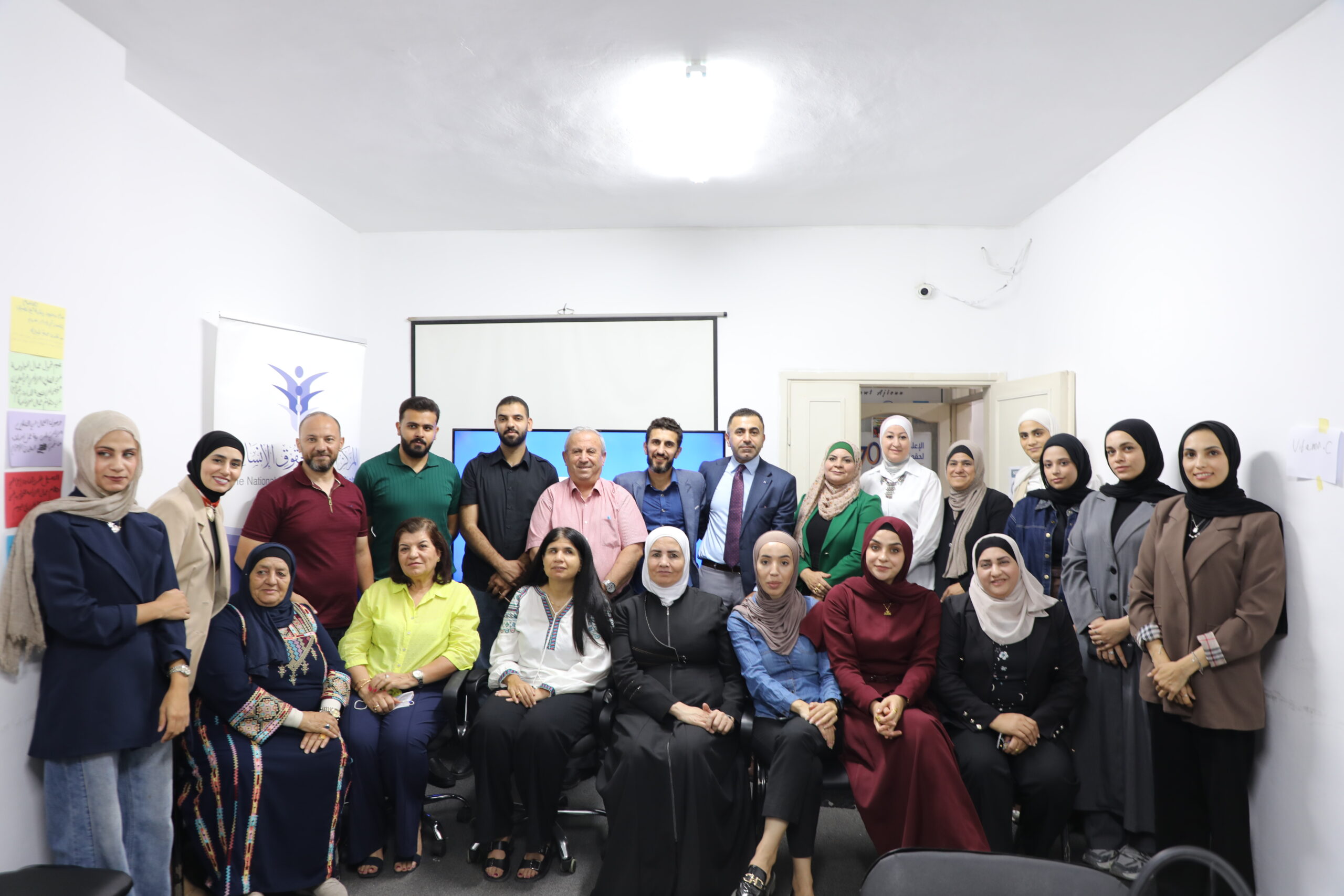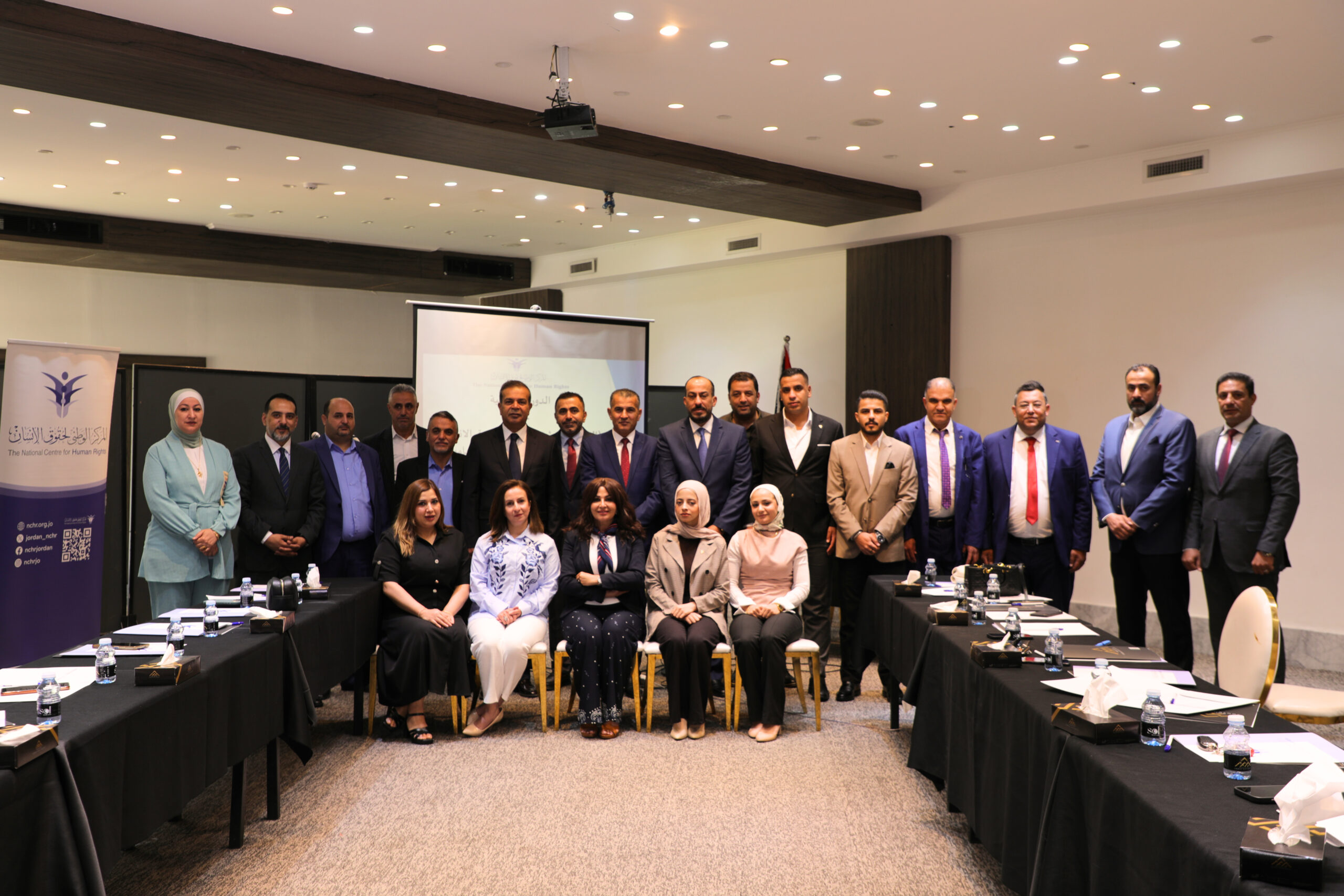
The National Centre for Human Rights (NCHR), in cooperation with the Jordan Bar Association (JBA), concluded the first training program entitled “Monitoring and Documenting Human Rights Violations,” which was held over two days in Amman with the participation of 60 male and female lawyers who are members of the Freedoms Committee of the Jordan Bar Association.
The program is implemented within the framework of the NCHR’s Strategic Plan and the Executive Plan of the Promotion Commission, both of which aim to build the capacities of professional groups and promote a culture of human rights. The program seeks to train a total of 180 lawyers across the Kingdom’s three regions.
During the opening session, H.E. Professor Khaldoun Al-Nsour, Vice Chairperson of the Board of Trustees of the National Centre for Human Rights, emphasized the importance of the strategic partnership between the NCHR and the Jordan Bar Association. He noted that this partnership represents a model of institutional cooperation in advancing human rights and reaffirmed the Centre’s commitment to continuing joint programs and activities that strengthen lawyers’ capacities and enhance their role in protecting rights and freedoms.
For his part, Mr. Rizq Shqairat, Chairperson of the Freedoms Committee and Member of the Council of the Jordan Bar Association, highlighted the significance of the program in enhancing the skills of committee members. He commended the ongoing cooperation with the NCHR and the valuable opportunities it provides for exchanging expertise and strengthening professional competencies in addressing human rights issues.
Ms. Nasreen Zureiqat, Commissioner for Promotion at the National Centre for Human Rights, explained that monitoring and documentation constitute one of the fundamental pillars of the work of the Freedoms Committee within the Jordan Bar Association. She noted that strengthening lawyers’ capacities in this field contributes to improving their professional performance and supports their efforts in defending rights and freedoms in accordance with international human rights best practices.
Mr. Omar Bani Mustafa, Head of the Awareness and Training Unit at the National Centre for Human Rights, stated that the program was designed to combine both theoretical and practical components, with the aim of equipping participants with the knowledge and practical skills necessary to effectively address human rights issues and to monitor and document violations in line with recognized professional methodologies.
At the conclusion of the program, H.E. Jamal Al-Shamayleh, Commissioner General of the National Centre for Human Rights, participated in the certificate award ceremony, emphasizing that building the capacities of lawyers represents an investment in strengthening the justice system and protecting human rights. He presented certificates to the participants in the presence of H.E. Professor Khaldoun Al-Nsour, Vice Chairperson of the Board of Trustees of the NCHR; Mr. Rizq Shqairat, Chairperson of the Freedoms Committee and Member of the Council of the Jordan Bar Association; and Ms. Nasreen Zureiqat, Commissioner for Promotion at the Centre.
At the end of the program, participants recommended the following:
• Continuing the implementation of specialized training programs in the fields of human rights, monitoring, and documentation.
• Strengthening the partnership between the National Centre for Human Rights and the Jordan Bar Association in the area of capacity building.
• Developing a practical guide for lawyers on monitoring and documenting human rights violations in accordance with national and international standards.
• Organizing advanced training programs on fair trial standards and human rights protection mechanisms.
The National Centre for Human Rights will continue implementing the program in its upcoming phases. The second training course will be held in the Northern Region, in Irbid Governorate, followed by the third course in the Southern Region, in Aqaba Governorate. This forms part of the Centre’s plan to train 180 lawyers across the Kingdom’s three regions and strengthen their capacities in monitoring and documenting human rights violations, thereby contributing to the promotion of the rule of law and the protection of rights and freedoms.