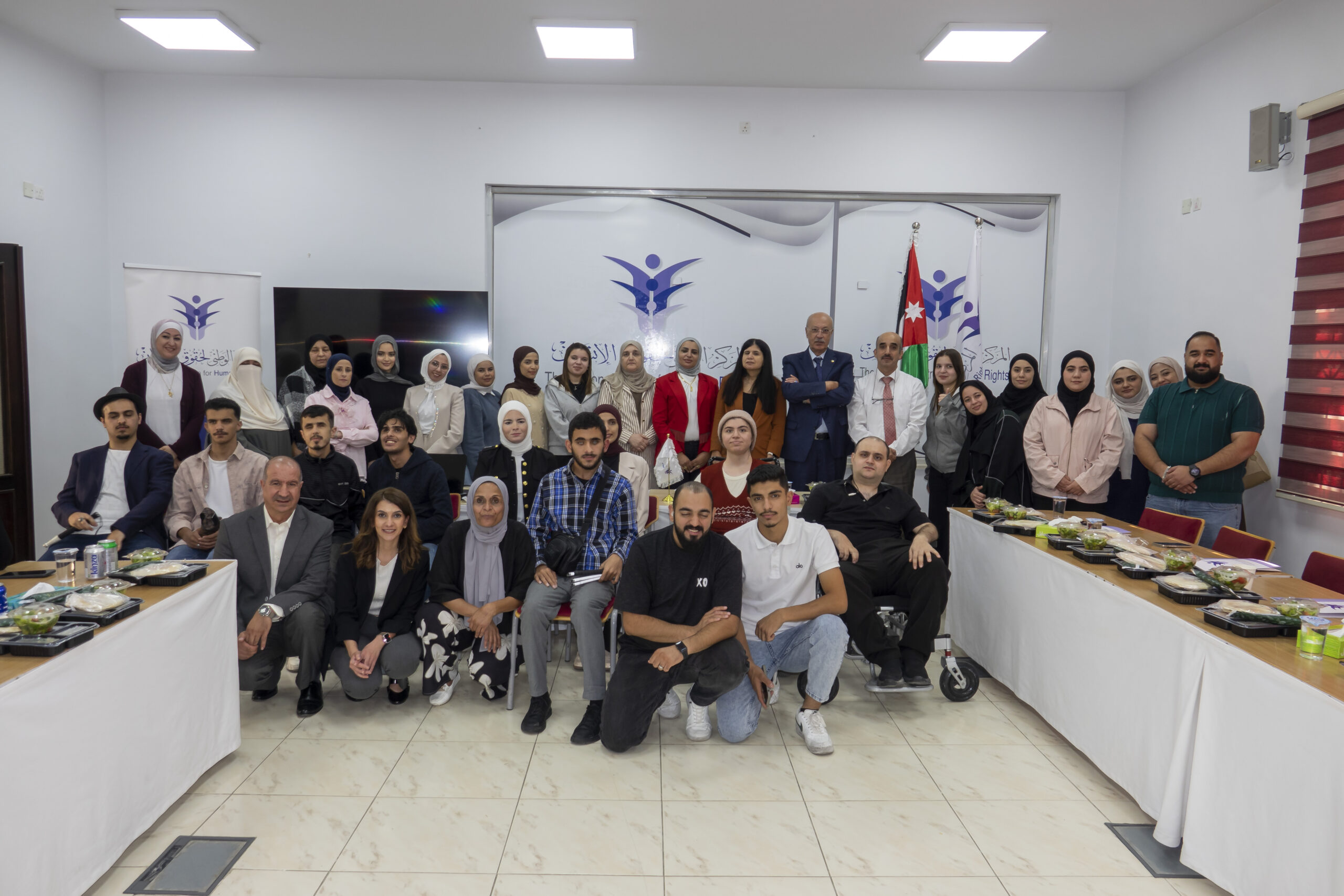
Amman – The National Center for Human Rights (NCHR) concluded two workshops addressing the role of judges, lawyers, and police officers in implementing international human rights standards, as well as the main obstacles and challenges facing the relevant authorities. The workshops, whose sessions were inaugurated by Commissioner General for Human Rights Alaa Al-Din Al-Armouti, were organized as part of the Center’s mission to protect human rights and promote a culture of respect for them.
The workshops witnessed strong attendance and active participation from judges, lawyers, and Public Security officers, who engaged in dialogue and discussions over the course of two days for each workshop.
At the beginning of the training, Issa Al-Maraziq, Director of the Awareness and Training Department at the National Center for Human Rights, welcomed the participants and emphasized the importance of access to justice, describing it as one of the Center’s strategic objectives.
Al-Maraziq explained that these workshops represented the second phase of a training program that had previously targeted each professional group separately. The current workshops brought together the three target groups—judges, lawyers, and Public Security officers—to strengthen coordination and promote their complementary roles.
He stressed that the work of each group complements that of the others, highlighting the importance of organizing joint activities of this nature to foster cooperation and strengthen professional networks.
During the workshops, Al-Maraziq addressed several key themes and topics, particularly the outcomes that can be achieved when these institutions perform their duties effectively and in accordance with international standards and national legislation.
These outcomes include building public trust, strengthening cooperation within society, contributing to the peaceful and fair resolution of disputes, and enhancing public confidence in the justice system.
He also highlighted the importance of protecting the security, safety, and rights of community members, promoting their well-being and economic development, ensuring the sustainability of their resources, and strengthening society’s resilience against threats.