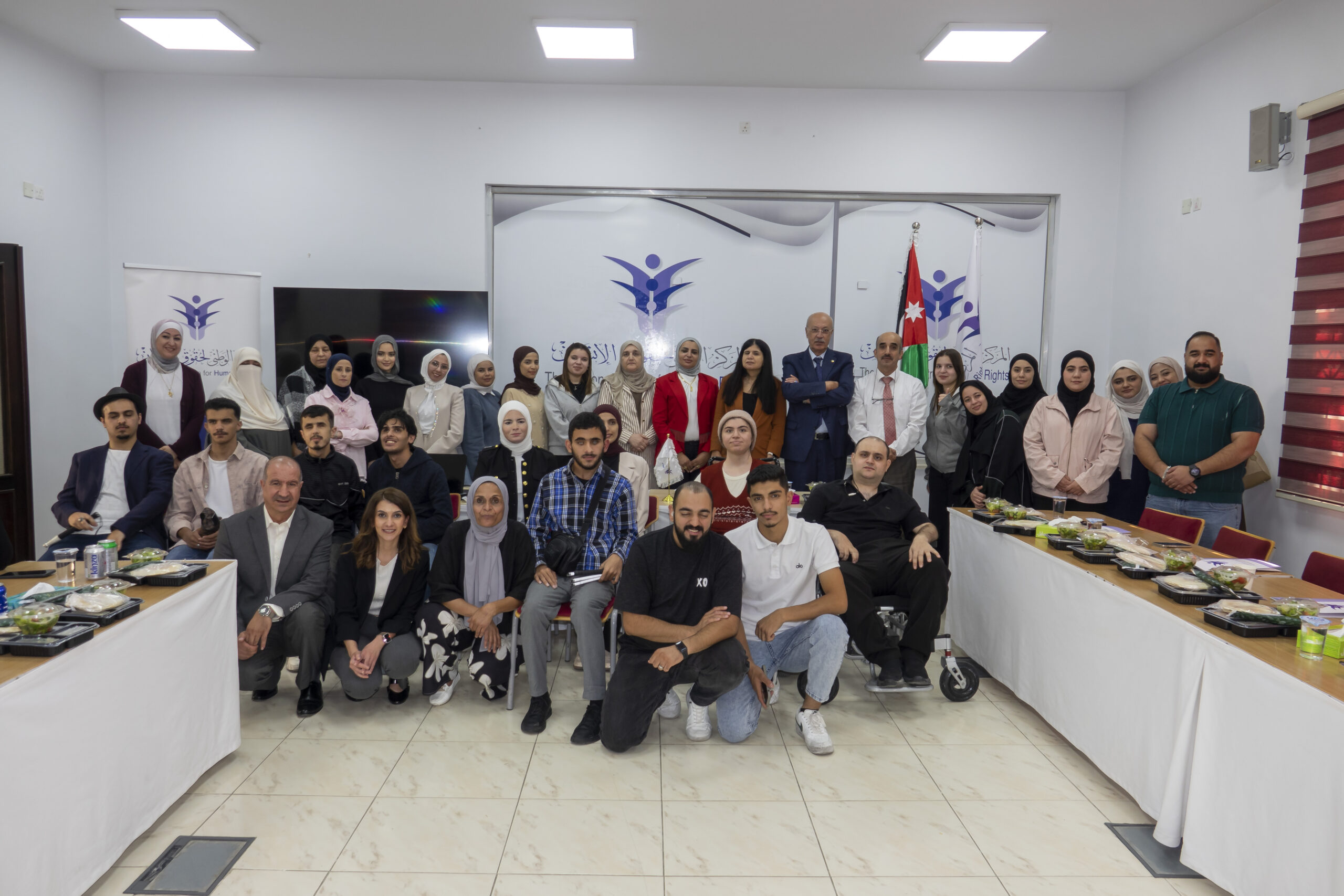
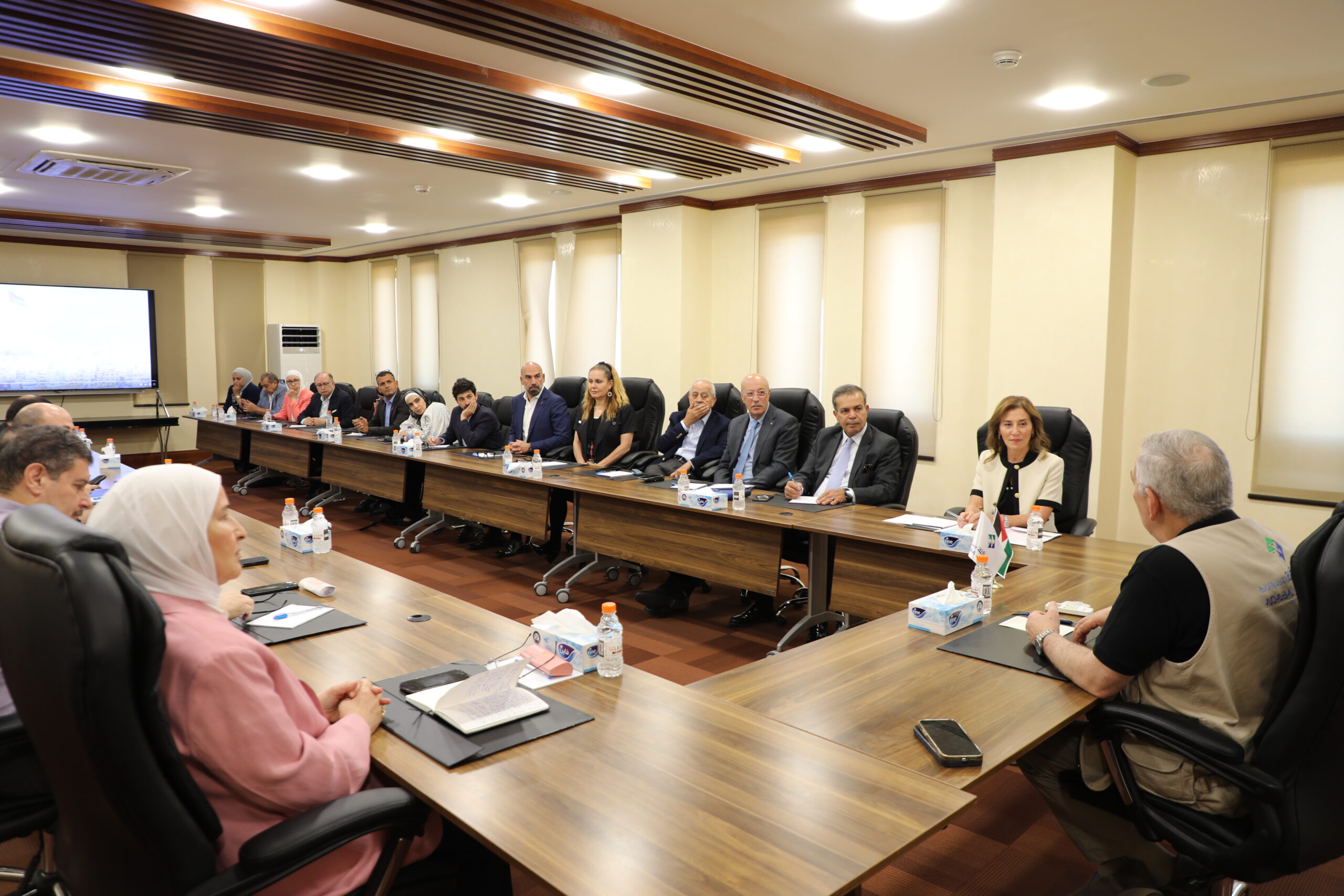
Zarqa – The Studies and Research Department at the National Center for Human Rights (NCHR) organized a discussion session on “Youth Political Participation” at Hashemite University today, under the patronage of Chairman of the Board of Commissioners of the Independent Election Commission (IEC), Engineer Musa Al-Maaytah.
The session was attended by several members of the Royal Committee to Modernize the Political System and a large number of university students.
The event was organized as part of the Center’s efforts to promote and disseminate a culture of human rights and raise young people’s awareness of legislative amendments governing political life, with the aim of strengthening their participation in the political process.
In her opening remarks, Acting Head of the National Center for Human Rights, Dr. Reem Abu Dalbouh, stated that Jordan is witnessing political reforms through the development of legislation governing political life, driven by the Royal directives and the forward-looking vision of His Majesty King Abdullah II.
Abu Dalbouh explained that amendments concerning the role of young people in the Political Parties Law and the Election Law, constitutional amendments, and the regulations governing student political party activities in higher education institutions all constitute legislative safeguards aimed at strengthening youth participation in public life.
She emphasized the importance of the discussion session in explaining these laws to students and providing them with an opportunity to raise questions and seek clarification from experts and specialists.
Abu Dalbouh also reviewed some of the key responsibilities and roles of the National Center for Human Rights, including its work to promote young people’s right to political participation within the framework of national legislation and international human rights standards.
She expressed her appreciation for the ongoing cooperation between the Center, the Independent Election Commission, and Hashemite University, which contributed to organizing this important event.
For his part, Chairman of the Board of Commissioners of the Independent Election Commission, Engineer Musa Al-Maaytah, emphasized the Commission’s commitment to raising awareness of youth political participation and educating young people about its importance.
He explained that the Commission implements various training and awareness programs introducing young people to fundamental concepts such as democracy, citizenship, the rule of law, and constructive dialogue.
These initiatives include the “I Participate” program, Political Week, the Student Forum, and several other activities aimed at encouraging youth engagement in public and political life.
Al-Maaytah further stated that Jordan’s vision for political participation and democratic development, coinciding with the beginning of the Kingdom’s second centennial, was not merely a collection of slogans but had been translated into concrete legislative reforms.
He explained that these reforms aim to strengthen both the quality and extent of political participation among all segments of society, particularly young people and women.
Al-Maaytah described the current period as a historic opportunity for Jordanian youth, urging them to take full advantage of the opportunities available to them.
He stressed that the Royal directives and the continued attention of His Royal Highness the Crown Prince provide essential support for young people, while current legislation creates favorable conditions for their political participation.
He added that government institutions, civil society organizations, and political parties also support youth engagement, emphasizing that young people themselves have a crucial responsibility to participate positively and effectively in bringing about meaningful change.
Meanwhile, President of Hashemite University, Professor Dr. Fawaz Al-Abed Al-Haq Al-Zboun, stated that the university, which has approximately 30,000 students, takes pride in being among the first universities to establish a campus environment supportive of national student political party activities.
He emphasized the university’s commitment to ensuring that students can freely engage in political and party activities without obstacles or concerns.
To achieve this objective, the university has implemented ambitious programs through the Deanship of Student Affairs and its various faculties, in cooperation with relevant partners, to develop students’ capacities and prepare them for participation in public life.
These programs focus on developing student leadership, introducing students to electoral processes and democratic mechanisms, and encouraging their involvement in public affairs and elections.
Al-Zboun also expressed the university’s pride in its effective cooperation and partnerships with the National Center for Human Rights and the Independent Election Commission, particularly in advancing the objectives of Jordan’s political modernization process.
He noted that the adoption of regulations governing student political party activities at universities reflects the Jordanian state’s determination to advance the political modernization project launched by His Majesty King Abdullah II, paving the way for the Kingdom’s second centennial with renewed determination and broad political participation.
For his part, Dr. Raed Al-Adwan, a member of the Board of Commissioners of the Independent Election Commission, discussed the Royal vision for strengthening youth political participation through the Political Parties Law.
Dr. Sadeq Shdeifat, Dean of Student Affairs at Hashemite University, provided a comprehensive overview of the current state of youth political participation in universities.
Meanwhile, Advisor Jamal Al-Raggad, Rapporteur of the Youth Committee of the Royal Committee to Modernize the Political System, reviewed the legislation governing youth political participation.
The session concluded with an interactive discussion during which the speakers responded to students’ questions, inquiries, and comments on the issues addressed.
Participants also discussed the main obstacles and challenges that hinder young people’s participation in political life.