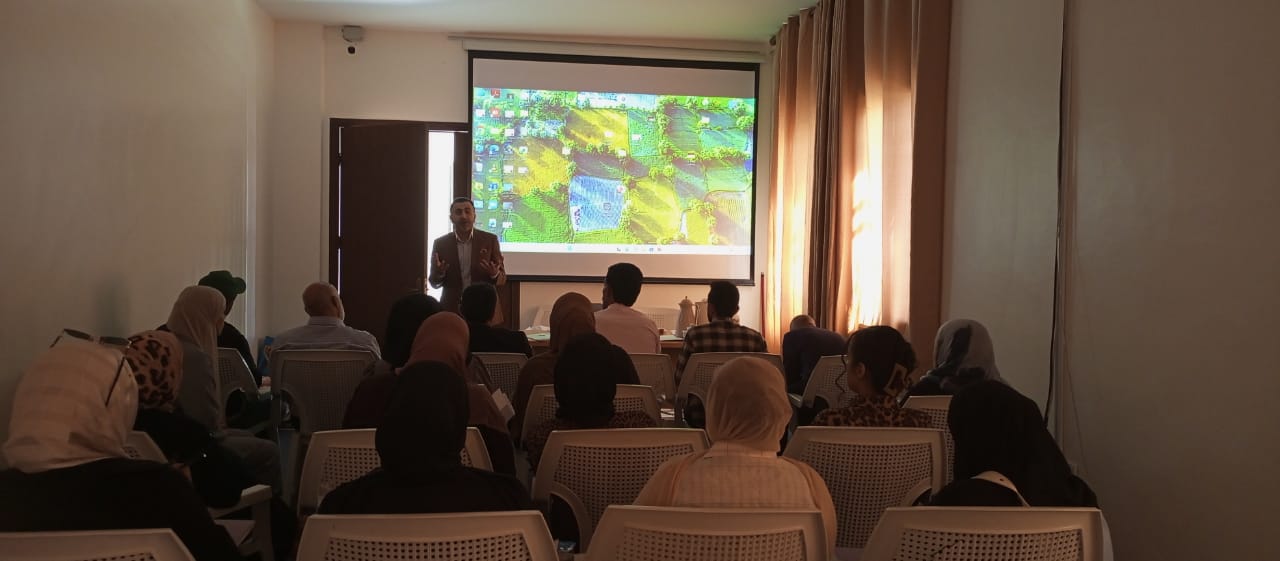
Amman – The National Centre for Human Rights (NCHR) held a seminar to discuss the Social Security Corporation’s (SSC) response to the COVID-19 pandemic, the intervention programmes it implemented, and their impact on the labour market and workers.
The seminar was attended by the Director General of the Social Security Corporation, Hazem Al-Rahahleh, representatives of the three parties to the production process (government, workers, and employers), and several economic experts.
At the beginning of the seminar, Chairman of the NCHR Board of Trustees, Dr. Raheel Gharaibeh, welcomed the participants, emphasizing that the Social Security Corporation had shouldered the greatest burden during the pandemic. He also commended the Corporation’s role in protecting the workforce, including workers and employees, and preventing their dismissal during that exceptional period.
In his welcoming remarks, Commissioner General for Human Rights Alaa Al-Din Al-Armouti stated that the pandemic had exacerbated the challenges facing both the formal and informal economies. He noted that many observers had anticipated that the Jordanian labour market would lose approximately 140,000 jobs. However, the government sought to address the crisis through several Defence Orders (Nos. 1, 6, 9, and others).
Al-Armouti pointed out that the main focus of these orders and related directives had been workers’ wages, despite workers being the most vulnerable party in this equation. He explained that deductions from workers’ salaries had reached as much as 60% under certain directives, arguing that it would have been more appropriate for the government to provide direct financial assistance to those affected.
Al-Armouti added that the Social Security Corporation had intervened to support individuals and businesses with tens of millions of Jordanian dinars. He reviewed the approximately ten programmes launched by the Corporation for this purpose, the most recent being the Ta’afi (Recovery) programme.
He noted that these programmes had faced criticism, particularly over claims that the financial support provided by the Corporation had benefited businesses rather than workers, as substantial portions of employees’ salaries had been deducted for the benefit of employers.
In his opening address, SSC Director General Hazem Al-Rahahleh reviewed the Corporation’s role before and during the pandemic. He emphasized that the pandemic had had far-reaching consequences, affecting not only the Corporation and Jordan but the entire world, at a time when established frameworks and approaches for responding to sudden crises of this nature were largely unavailable.
Al-Rahahleh explained that the Corporation’s primary focus during the pandemic had been to provide the necessary protection to subscribers employed in the private sector, given the sector’s importance and its impact on the national economy. Those who were not subscribed to the Corporation’s insurance schemes were supported by the National Aid Fund, while public-sector employees were largely unaffected and continued receiving their salaries as usual.
He added, “Accordingly, we submitted several proposals to the government to address the crisis. A Social Protection Committee was established for this purpose, chaired by the Minister of Social Development. During this process, we succeeded in persuading the government to adopt a number of proposals and protection programmes for subscribers.”
Al-Rahahleh stressed that the first Defense Order issued concerned social security. He explained that the Corporation focused on providing liquidity to the private sector through several measures, including allowing businesses to defer social security contributions amounting to approximately JD 120 million without interest.
He added that businesses were also permitted to suspend old-age insurance contributions, while in-kind assistance was provided to approximately 117,000 families.
Al-Rahahleh indicated that the Corporation would gradually transition to the Ta’afi (Recovery) programme over the following months, noting that a significant proportion of the sectors still operating under the Istidama (Sustainability) programme were expected to move to the new programme.
Responding to participants’ comments and questions, Al-Rahahleh stated that the Corporation had sought, under these exceptional circumstances, to strike a balance between the interests of workers and employers. He acknowledged that this was a contentious issue, adding that the Corporation had endeavoured to ensure fairness to the greatest extent possible.
Al-Rahahleh expressed surprise at criticism suggesting that the Corporation had undertaken responsibilities outside its legal mandate.
“Were we supposed to stand by and allow the labour market to collapse?” he asked.
He further explained that the Corporation had not incurred financial losses through these programmes, as the funds provided were recoverable advances. He added that examining the constitutionality of the Defence Orders was not within the Corporation’s responsibilities.
Al-Rahahleh also denied any gender-based discrimination in the Corporation’s programmes, stating, “We care about women, and our criteria are based on need and the extent of damage sustained by businesses as a result of the pandemic.”
Regarding proposals to reduce social security contribution rates, Al-Rahahleh explained that the initiative had emerged from lessons learned during the pandemic. He stressed that the decision had been carefully designed to ensure that it would neither undermine the Corporation’s financial position nor affect subscribers’ rights.
For his part, Hamada Abu Najmeh, President of the Workers’ House Centre, stated in his intervention that the role of the Social Security Corporation was not to provide financial support to businesses or employers, nor to provide assistance to patients, the elderly, or the education sector, or to impose deductions on workers’ wages to support employers.
He noted that the constitutionality of the Defence Orders permitting such measures, and the manner in which the government had implemented them, remained a matter of debate.
Abu Najmeh added that Jordan’s social security system was essentially a social insurance system funded through accumulated contributions and was therefore ultimately dependent on its subscribers.
He argued that an advanced social protection system should provide comprehensive insurance coverage for individuals throughout their lives, from birth to death, regardless of whether they are employed.
He also questioned the rationale behind reducing social security contribution rates at that time.
Meanwhile, Reem Aslan of the International Labour Organization (ILO) emphasized that preserving jobs was critically important, potentially justifying the Social Security Corporation’s decision to extend its activities beyond its conventional mandate, as maintaining existing jobs was less costly than creating new ones.
Aslan praised Jordan’s experience in social security, noting its alignment with international standards.
She also called for kindergartens to be included in the Istidama Plus (Sustainability Plus) programme.
“We do not want the Corporation to focus exclusively on sectors that predominantly employ men. We want greater attention to women’s employment and increased economic participation by women,” she said.
At the conclusion of the seminar, participants emphasized the need to establish a mechanism ensuring that financial support provided by the Corporation reaches those entitled to it, particularly individuals and businesses adversely affected by the pandemic.
The seminar was also attended by Government Coordinator for Human Rights Natheer Al-Awamleh, along with representatives from the Ministry of Labour, the International Labour Organization, the General Federation of Jordanian Trade Unions, Tamkeen for Legal Aid and Human Rights, the Jordanian Women’s Solidarity Institute (SIGI), the Air Transport Workers’ Union, the General Trade Union of Workers in Construction, the Textile and Garment Workers’ Union, the Food Industries Workers’ Union, Workers’ House for Studies, and the Jordanian National Commission for Women, as well as several experts and specialists in the issues under discussion.