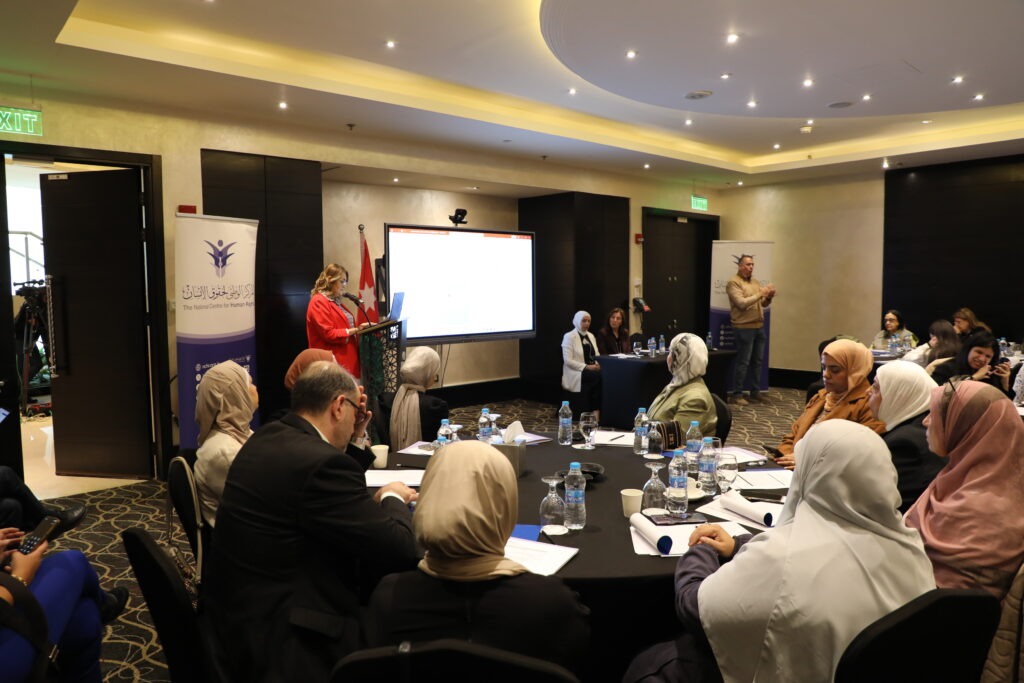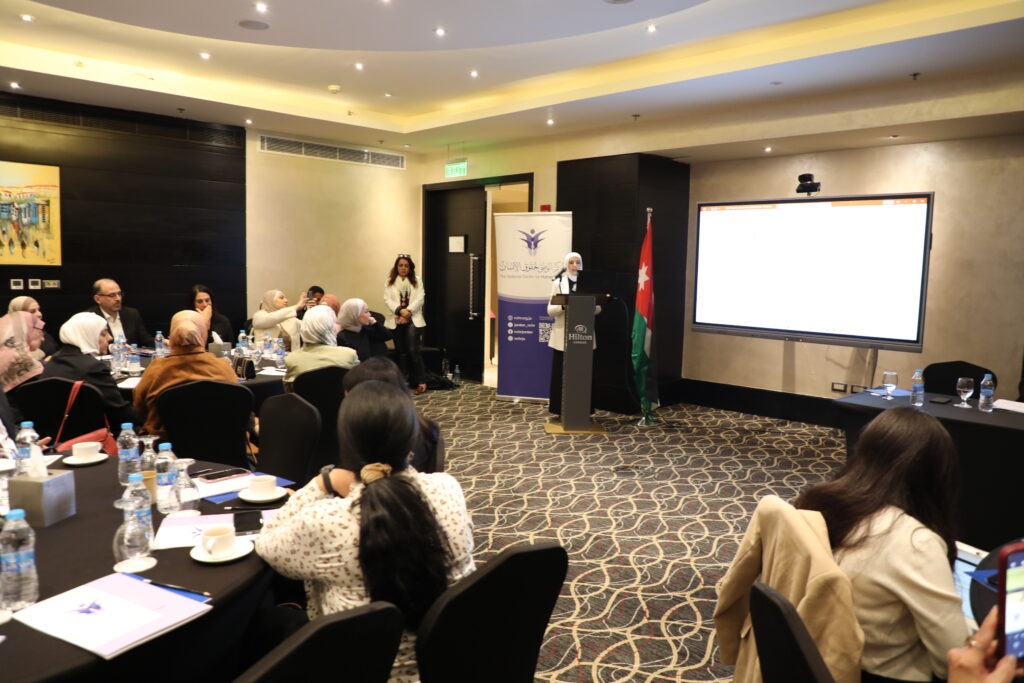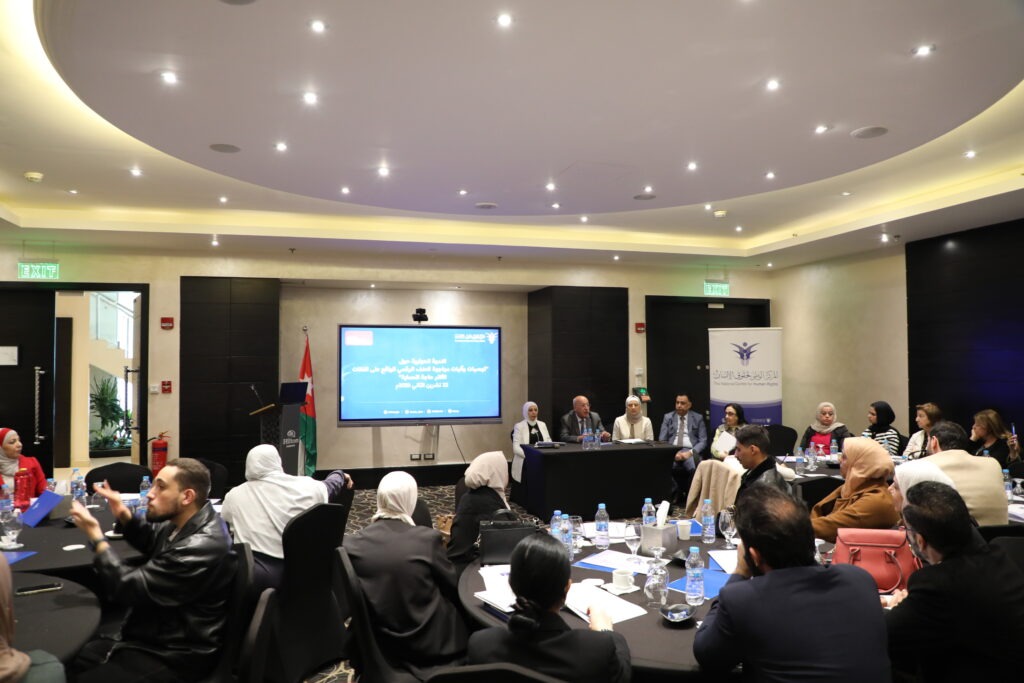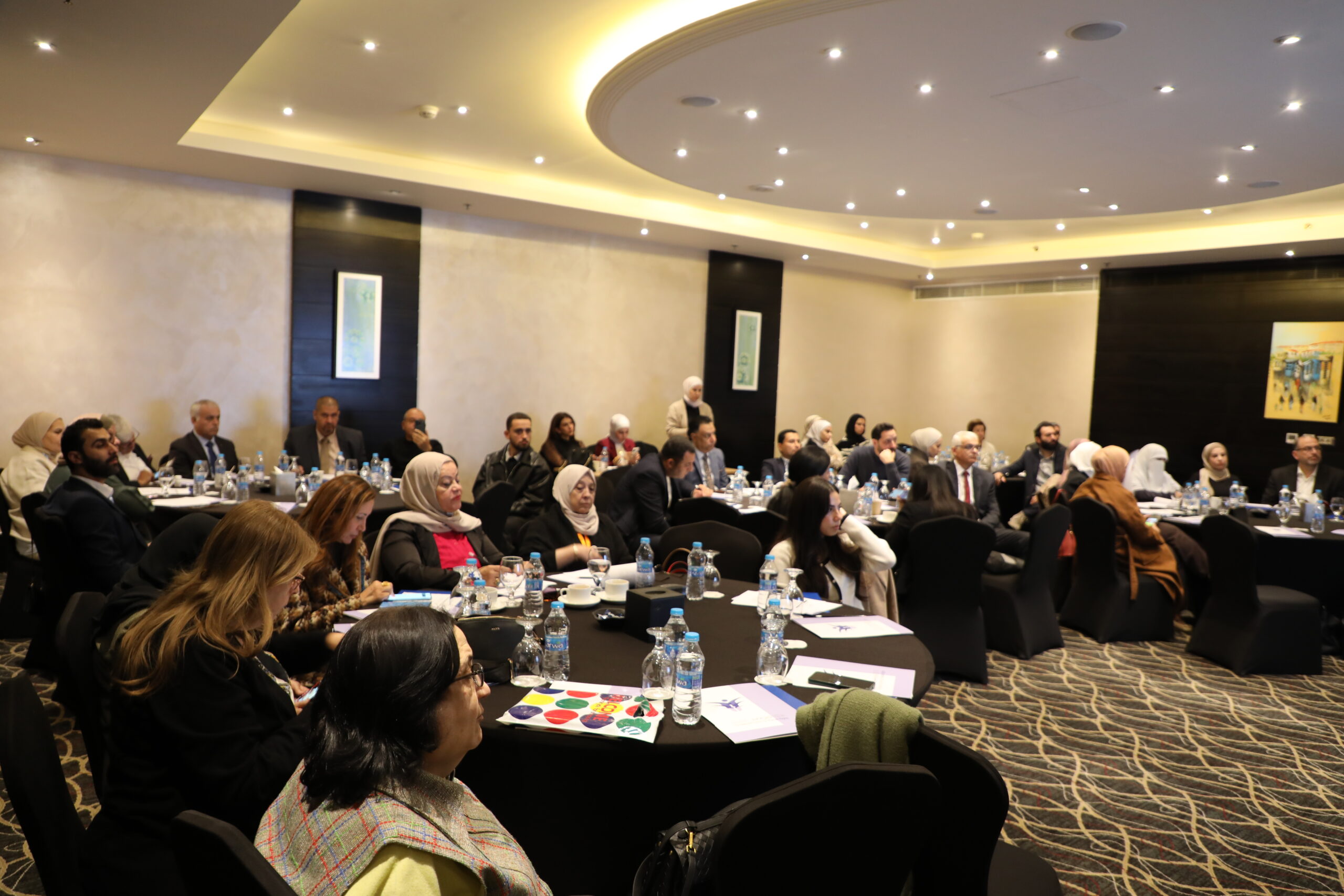
Amman – The National Centre for Human Rights (NCHR), in partnership with the Danish Institute for Human Rights (DIHR), convened a dialogue seminar on Sunday, 22 November 2026, entitled “Recommendations and Mechanisms to Address Digital Violence Against Groups Most in Need of Protection”. The event brings together representatives of government bodies, national institutions and civil society organisations, alongside human rights and digital protection experts.
The seminar builds on a series of dialogue sessions conducted by the NCHR across Jordan’s three regions, as well as a specialised session on protecting children in digital environments. It aims to move beyond identifying challenges towards developing practical recommendations that strengthen prevention, protection and response mechanisms, particularly for women, children, persons with disabilities and older persons.
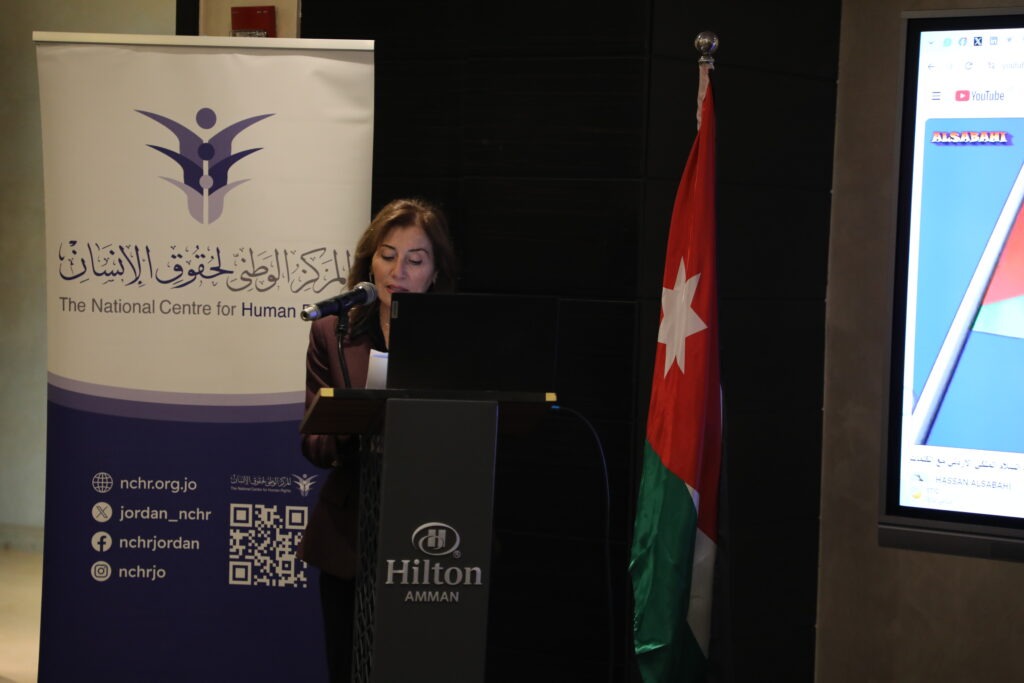
Chairperson of the NCHR Board of Trustees, Samar Al-Haj Hassan, emphasised that “Protecting individuals in digital spaces has become an inseparable extension of protecting their rights and freedoms in the physical world.”
She stressed that addressing digital violence requires a comprehensive national approach combining prevention, protection, response and accountability, alongside stronger cooperation among government bodies, national institutions, civil society organisations and other relevant stakeholders.
Al-Haj Hassan further highlighted the importance of following up on recommendations emerging from previous consultations and translating them into concrete measures that strengthen national protection mechanisms and ensure safe, inclusive digital environments that respect fundamental rights and human dignity.
NCHR Commissioner-General Jamal Al-Shamayleh emphasised that “Protecting the rights of women, children and older persons lies at the heart of the Centre’s humanitarian and human rights mandate. This responsibility extends to the digital sphere, requiring stronger mechanisms to prevent and address online violence and exploitation and to ensure a safe digital environment that safeguards their rights and human dignity.”
For her part, Kholoud Shkakhwa, Country Coordinator and Director of the Danish Institute for Human Rights in Jordan, highlighted the importance of the partnership with the NCHR in developing national responses to digital violence, stating that “Recommendations provide an entry point for setting priorities, building dialogue and developing activities that can be implemented and monitored.”
Shkakhwa commended the NCHR’s efforts to engage rights holders and relevant stakeholders through consultations across the governorates. She emphasised the importance of translating the resulting recommendations into an action plan supported by measurable human rights indicators, while safeguarding interconnected digital rights, including privacy, equality, freedom of opinion and expression, and access to justice.
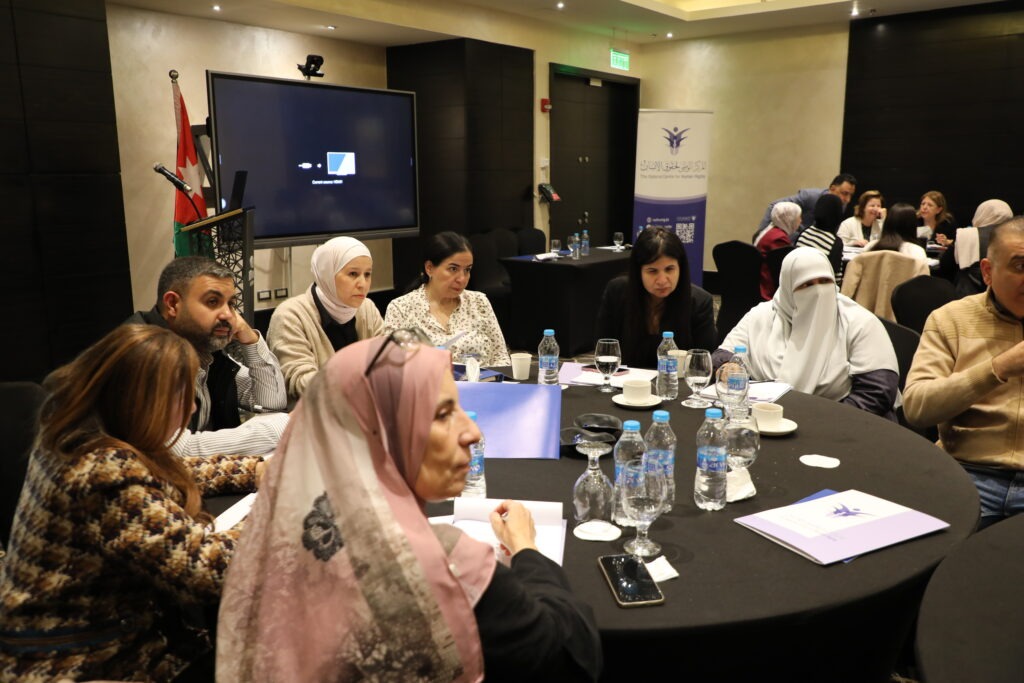
The seminar includes specialised working groups addressing the different forms of digital violence affecting women, children, persons with disabilities and older persons. Discussions focus on legislative, policy and institutional priorities, as well as prevention, reporting, referral and response mechanisms, and the responsibilities of relevant stakeholders in implementing and monitoring recommendations.
Sign-language interpretation will also be provided to facilitate accessibility and inclusive participation for persons with hearing disabilities.
Through this initiative, the NCHR seeks to develop a consolidated document outlining proposed recommendations and mechanisms for their implementation and follow-up, in cooperation with relevant partners, contributing to national efforts to address digital violence and promote safer, more inclusive digital environments that respect human rights and uphold human dignity.