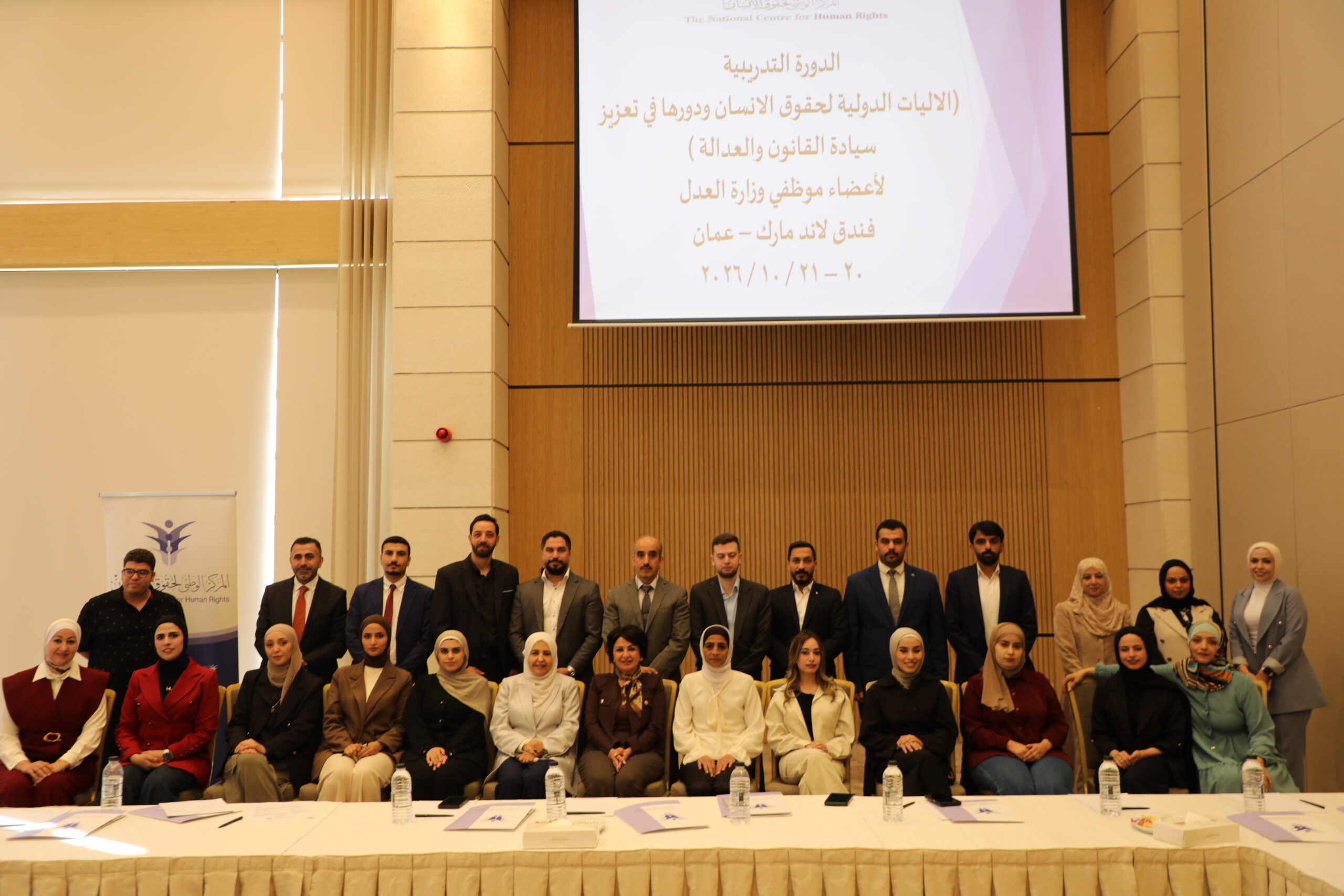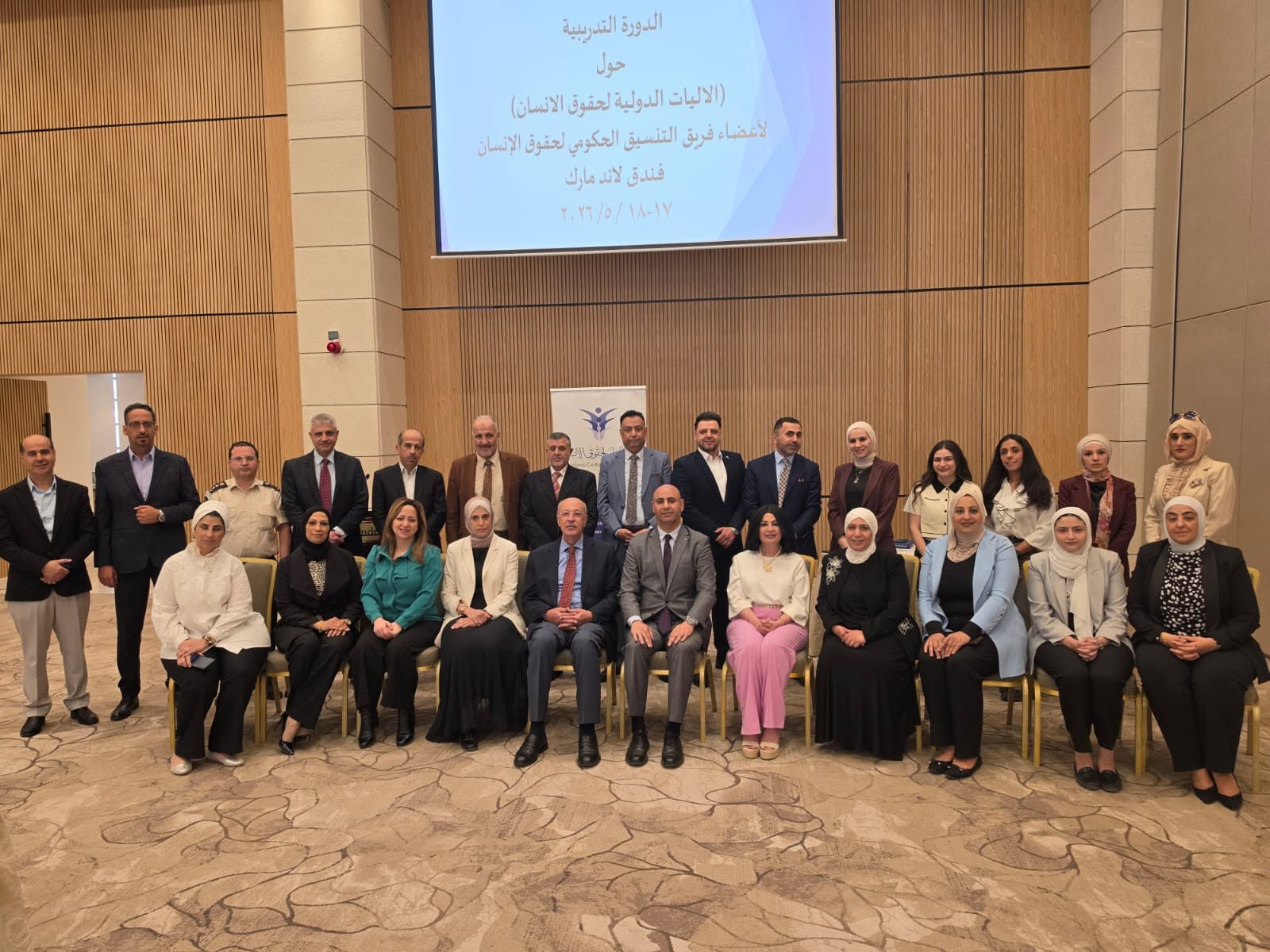
The National Centre for Human Rights (NCHR), in cooperation with the Office of the Government Coordinator for Human Rights, concluded a specialized training course on “International Human Rights Mechanisms” for members of the Government Coordination Team. The two-day course was held on 17–18 May 2026 at the Landmark Hotel in Amman and brought together representatives from a number of ministries and public institutions.
The training was organized as part of national efforts to strengthen institutional capacities in the field of human rights, enhance the competencies of government coordination teams in engaging with international human rights mechanisms, preparing national reports, and following up on the implementation of recommendations issued by relevant United Nations human rights bodies.
The course was inaugurated in the presence of Commissioner General Jamal Al-Shamayleh, Government Coordinator for Human Rights Muath Al-Momani, and Commissioner for Promotion Nasreen Zureikat, along with several officials from the National Centre and participants representing various government entities.
In his opening remarks, the Commissioner General emphasized that such training programs reflect the National Centre’s commitment to its mandate of promoting and protecting human rights and fostering effective partnerships with government institutions. He noted that Jordan, under the leadership of His Majesty King Abdullah II Ibn Al Hussein and with the support and close follow-up of His Royal Highness Crown Prince Al Hussein bin Abdullah II, continues its efforts to uphold human rights principles, strengthen the rule of law, and further develop the country’s justice system and public institutions.
For his part, Government Coordinator for Human Rights Muath Al-Momani stressed the importance of strengthening coordination among national institutions and enhancing the technical readiness of government coordination teams. He noted that these efforts enable participants to prepare accurate and professional reports that reflect national achievements and existing challenges, while underscoring the importance of continued cooperation with the National Centre in delivering specialized training programs.
Commissioner for Promotion Nasreen Zureikat highlighted the importance of the partnership between the National Centre and the Office of the Government Coordinator for Human Rights. She noted that such training courses provide an important platform for exchanging expertise and building capacities, while enhancing the practical knowledge of government coordination teams and strengthening institutional performance in the field of human rights.
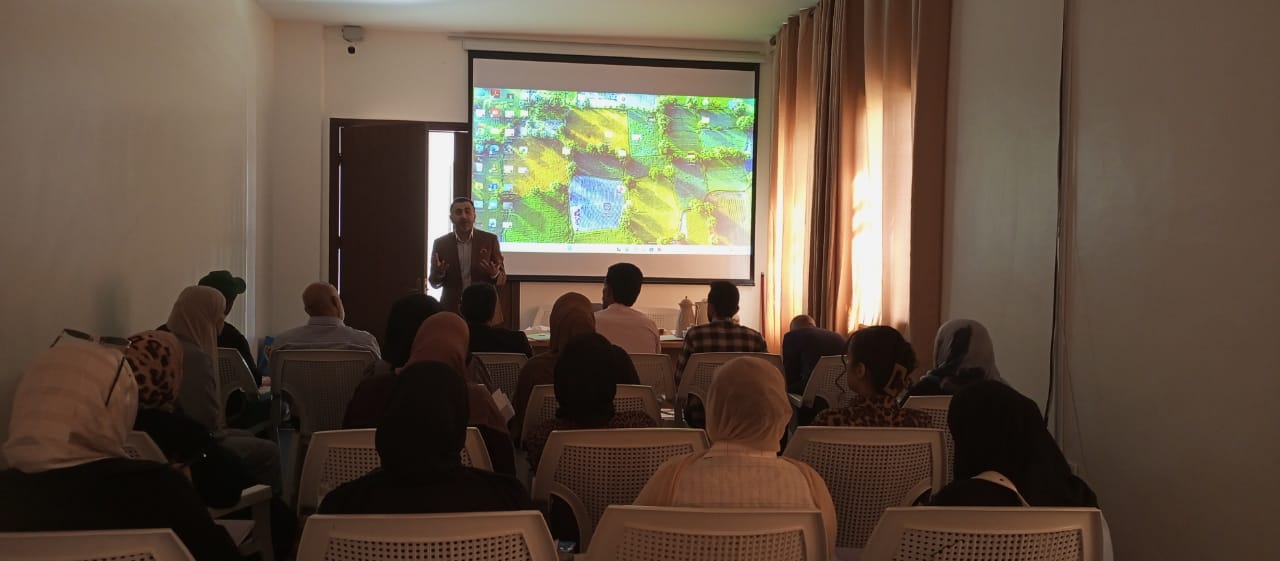
The training program featured a series of specialized sessions covering international human rights protection mechanisms, treaty bodies, the preparation of reports submitted to international treaty committees, the Universal Periodic Review (UPR) mechanism and its reporting guidelines, the use of human rights indicators, and the special procedures of the Human Rights Council.
The course also included practical exercises and interactive group activities facilitated by Omar Bani Mustafa, Head of the Awareness and Training Unit. These sessions were designed to strengthen participants’ practical skills and provide opportunities for exchanging experiences among representatives of government institutions, thereby enhancing coordination mechanisms and improving national cooperation on human rights.
Participants actively engaged throughout the course, emphasizing the relevance of the topics to their professional responsibilities. They commended the specialized training content, the expertise of the facilitators, and the valuable opportunities the course provided for dialogue and the exchange of practical experiences and perspectives.
The course concluded with an evaluation and graduation session, during which participants emphasized the importance of continuing such specialized programs and expanding training on issues related to international human rights mechanisms, with the aim of further strengthening government performance and supporting national efforts in the field of human rights.