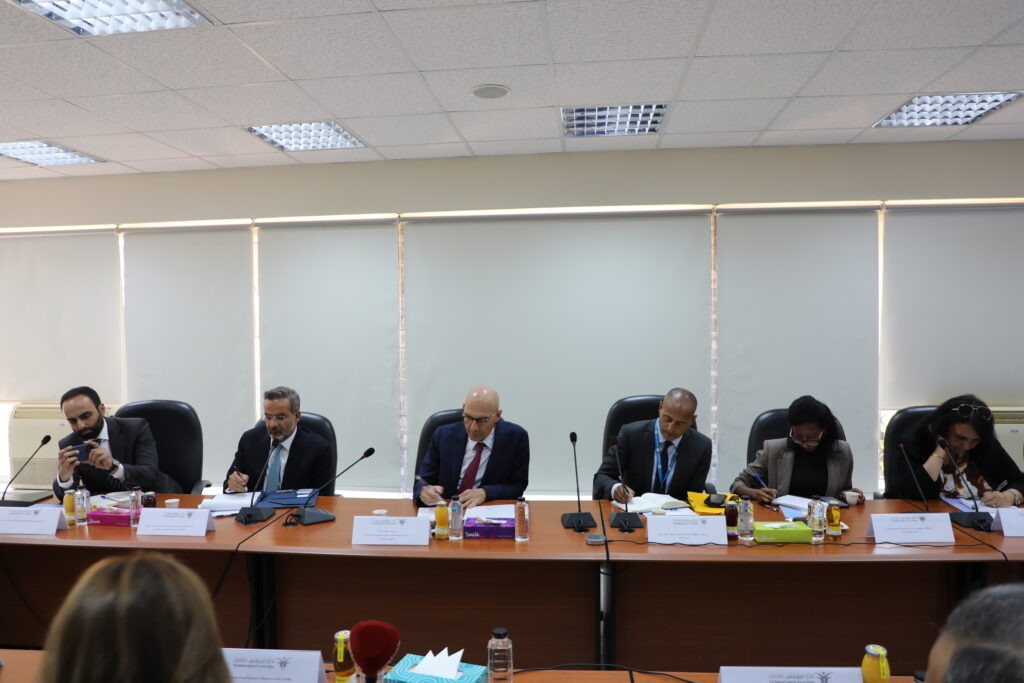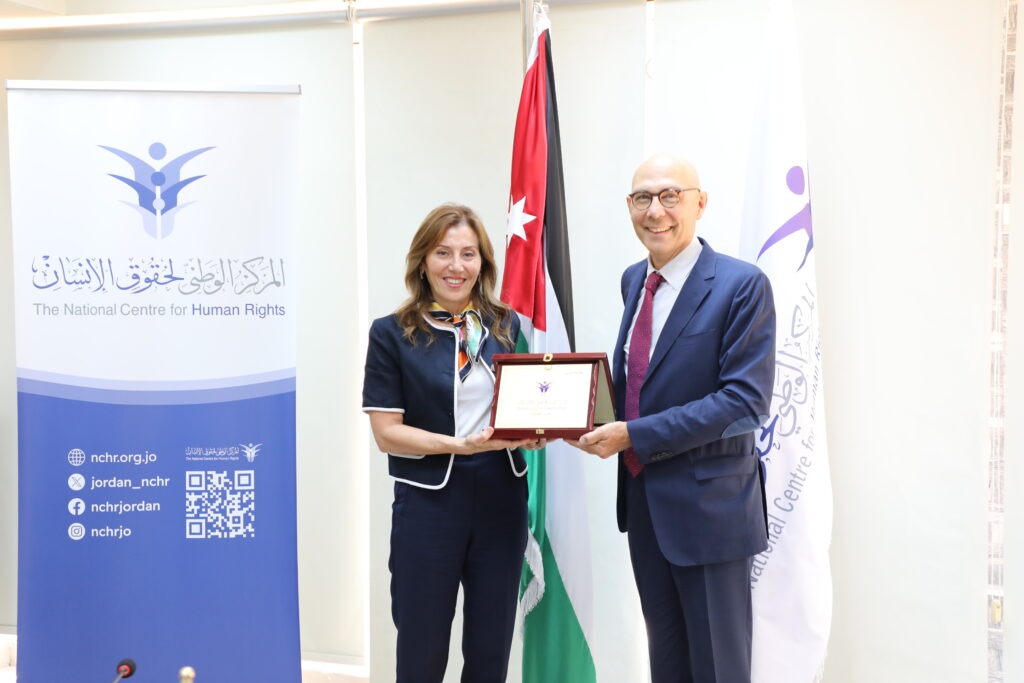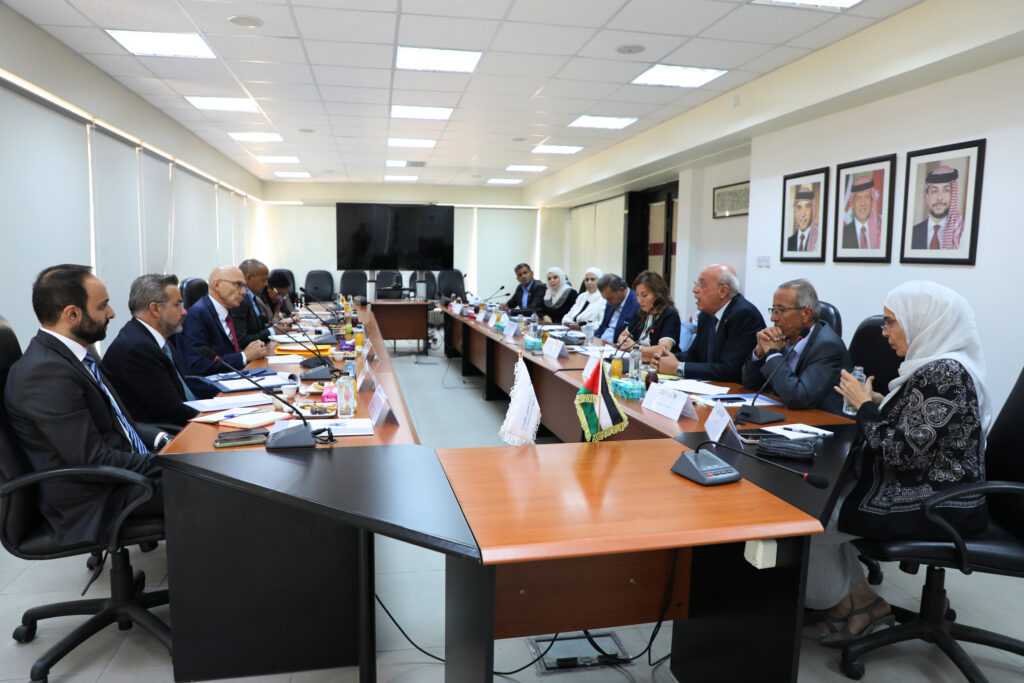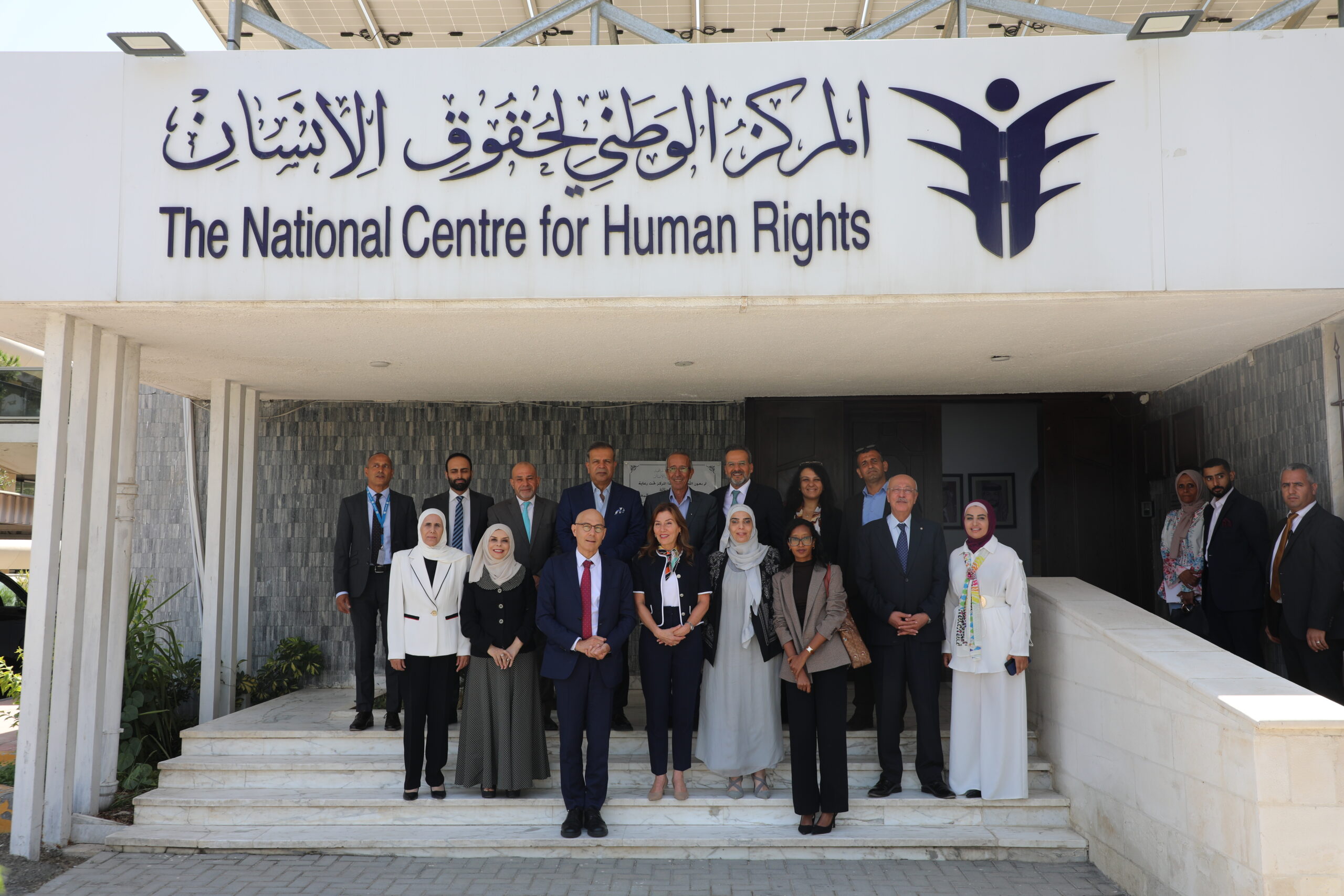
AMMAN, Jordan — The National Center for Human Rights (NCHR) received U.N. High Commissioner for Human Rights Volker Türk and an accompanying delegation Tuesday, in a visit that affirmed the depth of the partnership between the center and the Office of the U.N. High Commissioner for Human Rights (OHCHR) and their shared commitment to strengthening the independence of national human rights institutions and upholding the principles of human dignity and the rule of law.
NCHR Board of Trustees Chair Mrs Samar Al-Haj Hassan welcomed the delegation, saying the center values its long-standing relationship with OHCHR, which she said has supported NCHR’s independence and helped preserve its international accreditation under the Paris Principles. She noted the center is preparing for its next re-accreditation review and continuing to work with OHCHR to implement international commitments and strengthen human rights mechanisms.
NCHR Commissioner General Jamal Hamed Al- Shamayleh said the visit comes as the human rights system faces mounting regional and international challenges. He stressed the importance of continued joint work between national institutions and OHCHR to protect and advance rights and freedoms, implement recommendations from international human rights mechanisms, and reinforce NCHR’s role as an active national partner.
Türk said independent national human rights institutions play a central role in upholding justice and the rule of law. “As independent institutions, we have a responsibility to be a voice of reason and wisdom,” he said. He added that national human rights institutions, including Jordan’s, embody national ownership of human rights, and that OHCHR’s partnership with such institutions is built on complementarity: “We help and complement one another.”
Türk said human rights represent the most important safeguard against All forms of racial discrimination, and that respect for human dignity and equality underpins the international human rights system. He said OHCHR looks forward to expanding cooperation with NCHR, particularly in supporting Jordan’s national mechanism for following up on and enforcing recommendations issued by international human rights bodies, in order to advance implementation of the Kingdom’s international commitments.
The meeting placed particular emphasis on the rights of persons with disabilities. Both sides affirmed the importance of ensuring their full participation in public life and equal access to services, justice, education and employment, and stressed the need to align national policies and legislation with international standards, advance inclusion, and remove barriers to the full enjoyment of their rights, in line with Jordan’s international commitments.
Both sides closed the meeting by affirming their continued cooperation, which they said contributes to strengthening the protection of human rights in Jordan, supporting independent national institutions, and reinforcing a culture of human rights as a shared responsibility and a foundation for development, justice and peace.
The National Center for Human Rights (NCHR) is Jordan’s independent national human rights institution, accredited with ‘A’ status by the Global Alliance of National Human Rights Institutions (GANHRI) under the Paris Principles.