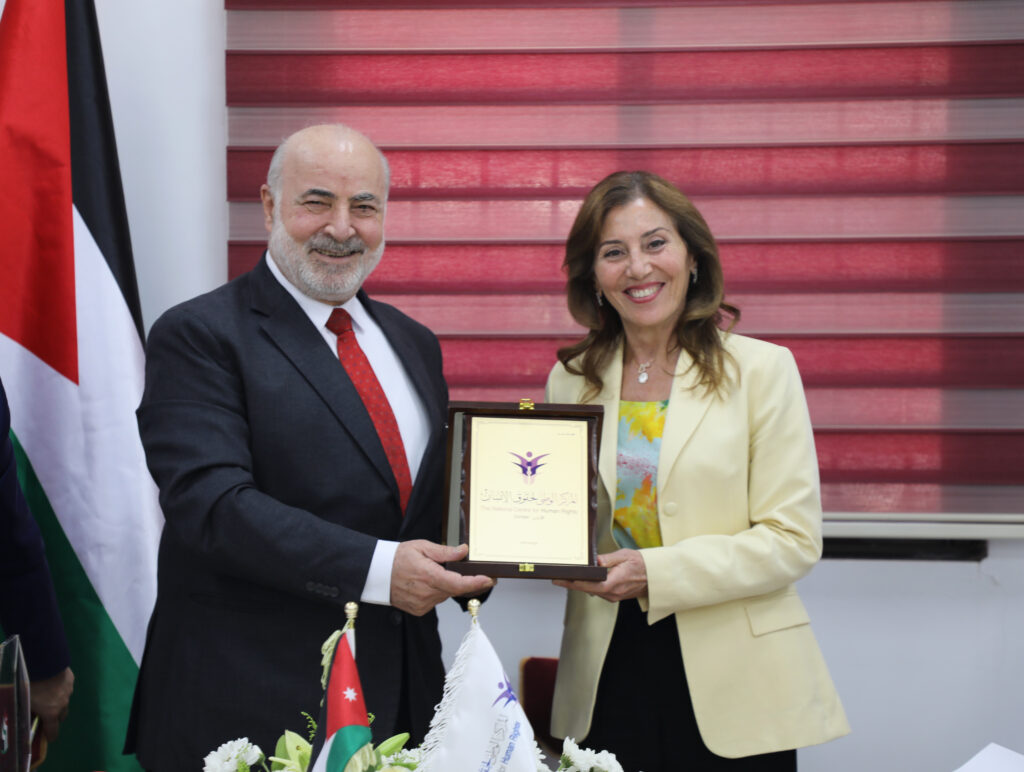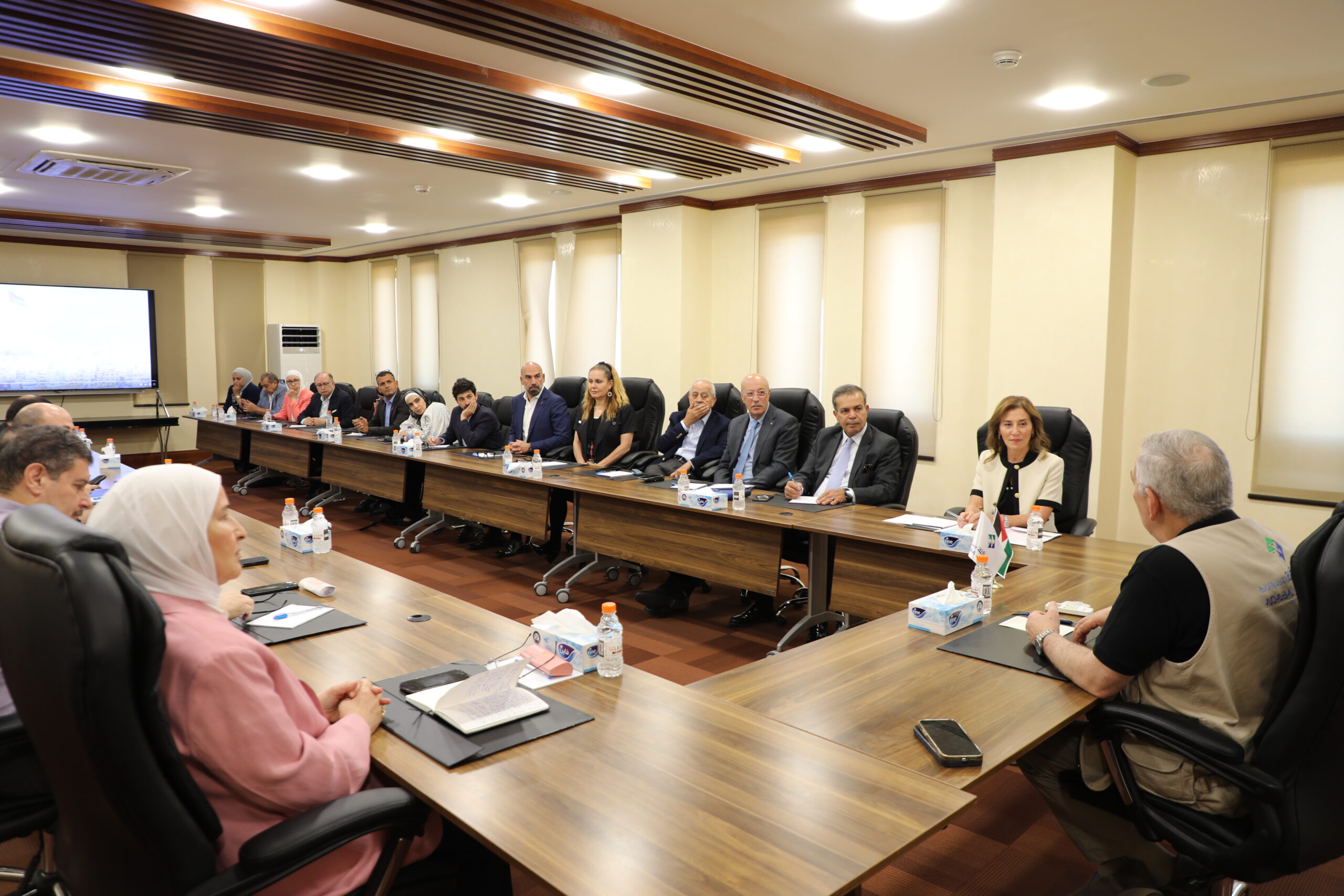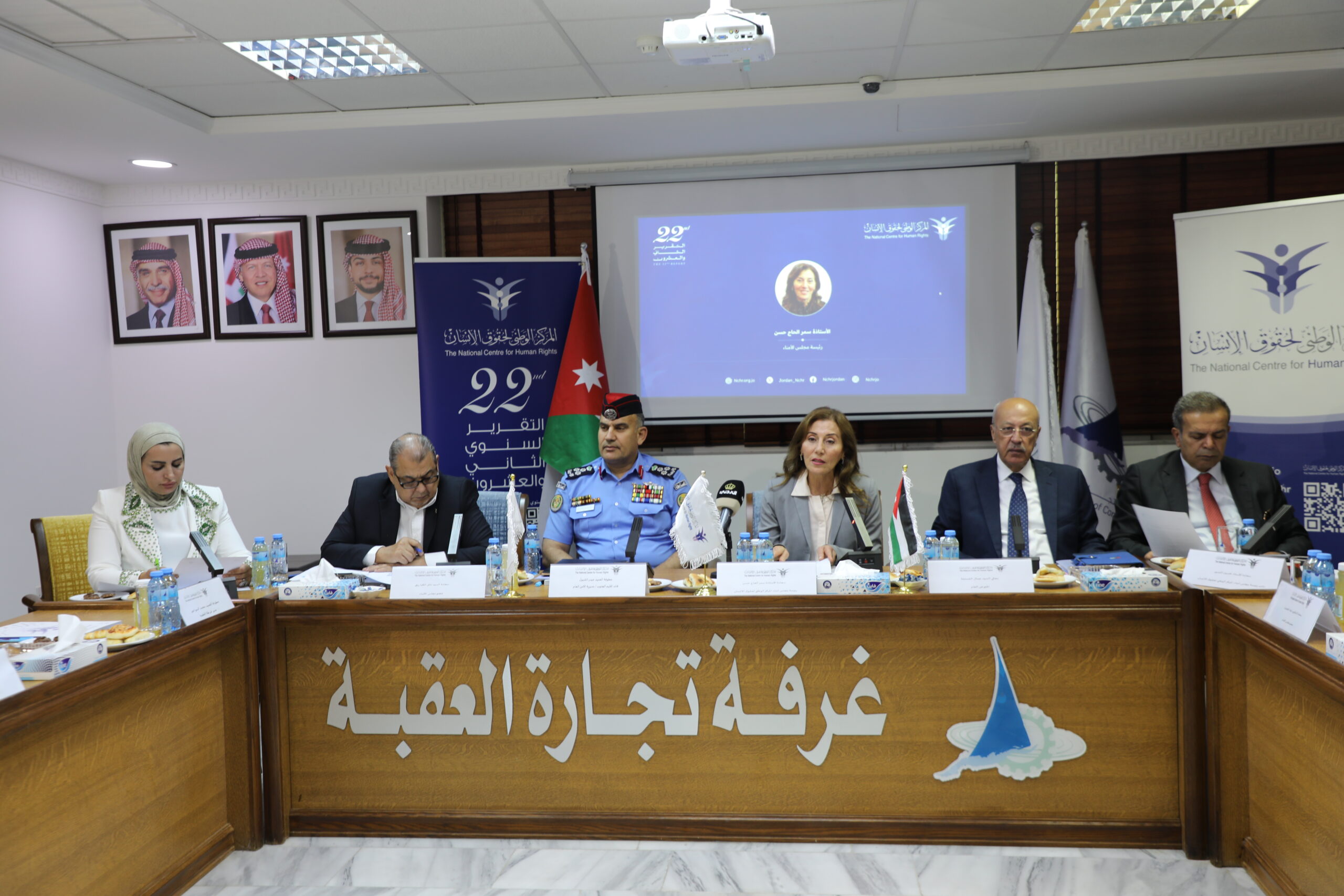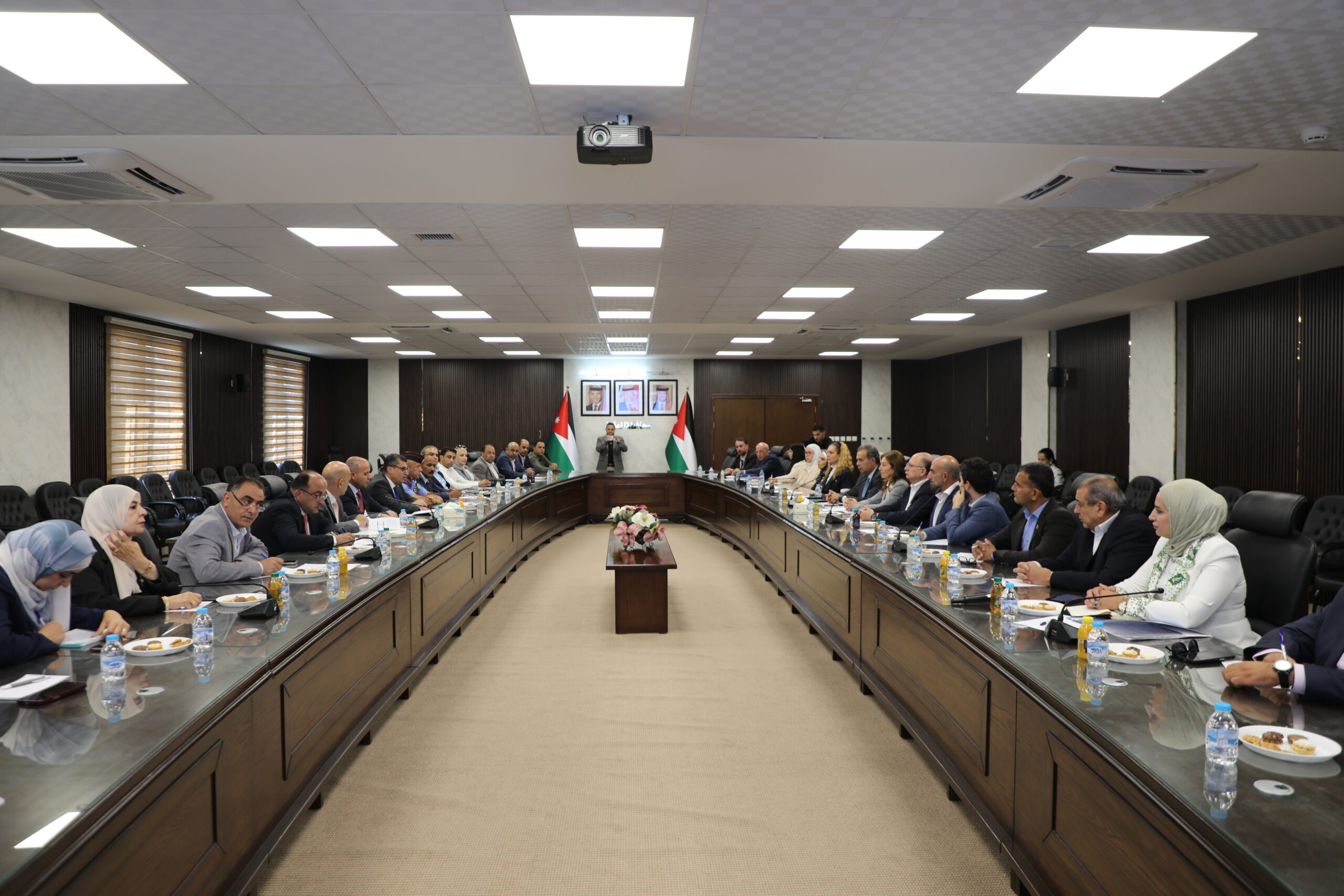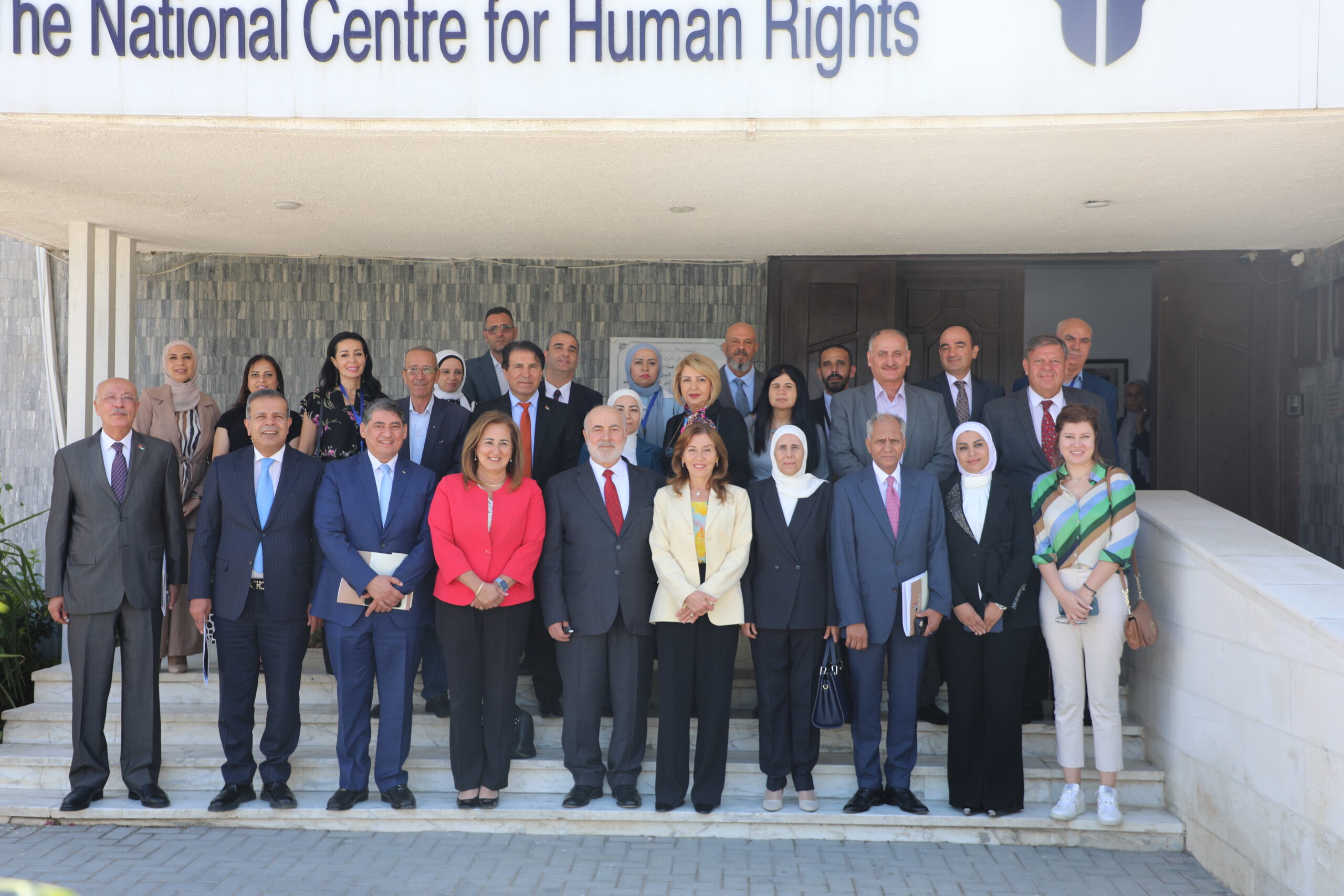
The National Centre for Human Rights (NCHR) and the Economic and Social Council held a joint coordination meeting on Sunday at the Centre’s headquarters to discuss frameworks for institutional cooperation and the establishment of a sustainable strategic partnership aimed at strengthening mechanisms for following up on and implementing the recommendations contained in the NCHR’s Annual Report.
The meeting was chaired on behalf of the NCHR by Ms. Samar Al-Haj Hassan, Chairperson of the Board of Trustees, in the presence of Mr. Jamal Al-Shamayleh, Commissioner General for Human Rights; Mr. Khaldoun Al-Nsour, Vice-Chairperson of the Board of Trustees; and a number of Board members. The Economic and Social Council delegation was headed by Prof. Dr. Musa Shteiwi, President of the Council, in the presence of Mr. Natheer Al-Awamleh, Secretary-General of the Council, and a number of Council members.
Ms. Al-Haj Hassan emphasized that the meeting represents an important step toward strengthening cooperation and complementarity among national institutions and moving beyond identifying challenges and issuing recommendations toward joint efforts to follow up on those recommendations and enhance their implementation in practice.
She noted that the Centre’s Annual Report serves as a national reference for monitoring the human rights situation and identifying key developments and challenges. She stressed the importance of addressing its recommendations systematically by identifying priority recommendations, the relevant authorities responsible for their implementation, the challenges that may hinder implementation, and practical pathways that can be effectively monitored and measured.
She further noted that a significant number of the Report’s recommendations relate to economic and social rights and issues that directly affect people’s lives, foremost among them the rights to work, social protection, health, and education, as well as an adequate standard of living, equal opportunities, social justice, and the protection of groups most in need of care and protection.
Ms. Al-Haj Hassan underscored the importance of partnership with the Economic and Social Council, given its role in studying and analysing economic and social issues and policies, facilitating dialogue and consultation among different stakeholders, and providing expertise that can help connect the human rights dimension with economic and social realities and contribute to the development of practical and implementable proposals.
For his part, Mr. Jamal Al-Shamayleh, Commissioner General for Human Rights, emphasized that strengthening coordination with national institutions, particularly the Economic and Social Council, would support efforts to translate the recommendations of the Annual Report into actionable pathways that can be effectively implemented and monitored, particularly those relating to economic and social rights, the needs of groups most in need of support, and the rights of persons with disabilities.
Prof. Dr. Musa Shteiwi, President of the Economic and Social Council, stressed the importance of establishing a practical and sustainable framework for cooperation with the National Centre for Human Rights, given the close relationship between the protection of human rights and the quality of economic and social policies, particularly in the areas of employment, education, social protection, health, the environment, and development.
He highlighted the importance of strengthening cooperation between the committees of the Council and the Centre through the examination of recommendations contained in the Centre’s reports, the preparation of joint studies and policy papers, the exchange of expertise, and contributions to the review of legislation and public policies.
Prof. Shteiwi explained that combining the Centre’s expertise in human rights with the Council’s expertise in economic and social analysis and national dialogue could help translate recommendations into practical, implementable policies and solutions. He emphasized that the meeting marks the beginning of an ongoing institutional cooperation process between the two institutions aimed at enhancing the quality of public policies and legislation and serving the interests of citizens and the broader national interest.
For his part, Mr. Natheer Al-Awamleh, Secretary-General of the Economic and Social Council, explained that the meeting was convened in recognition of the importance of the National Centre for Human Rights’ recommendations, which address issues affecting a wide range of sectors across the Kingdom. He stressed the importance of moving these recommendations from the conceptual level toward concrete implementation pathways.
Mr. Al-Awamleh noted that cooperation between the two institutions will be guided by the recommendations themselves through identifying areas of convergence and coordination, setting priorities, determining issues that can be addressed jointly, and preparing working papers, policy papers, and studies that support the implementation of the recommendations.
He also emphasized the importance of drawing on the Centre’s field monitoring tools and mechanisms and the information and data they provide on challenges and conditions on the ground. Such evidence can assist the Council in directing its work and developing perspectives and recommendations that are more closely aligned with realities on the ground and the needs of citizens.
Mr. Al-Awamleh added that this cooperation represents a practical model of partnership between the two institutions, strengthening complementarity between their respective roles and supporting the translation of recommendations into actionable and measurable pathways.
At the conclusion of the meeting, the two institutions agreed to establish a joint committee comprising representatives of the National Centre for Human Rights and the Economic and Social Council. The committee will develop a roadmap through the end of 2026, outlining joint programmes, events, and activities, as well as priorities for action and mechanisms for coordination and follow-up.
The two institutions also agreed to strengthen coordination between their respective committees, draw on the studies, reports, and expertise available to both institutions, and identify a number of priority issues and recommendations to be addressed through joint studies, policy papers, and dialogues. These efforts are intended to support the implementation of relevant recommendations and strengthen complementarity among national institutions in the areas of human rights, economic and social policies, and legislation.
This cooperation is consistent with the commitment of both institutions to expanding opportunities for dialogue and coordination and strengthening national partnerships. It also supports the transition from identifying challenges and issuing recommendations to developing practical mechanisms for their follow-up and implementation, while contributing to reform and development efforts and improving the quality of public policies in ways that positively impact citizens’ lives and the enjoyment of their rights.