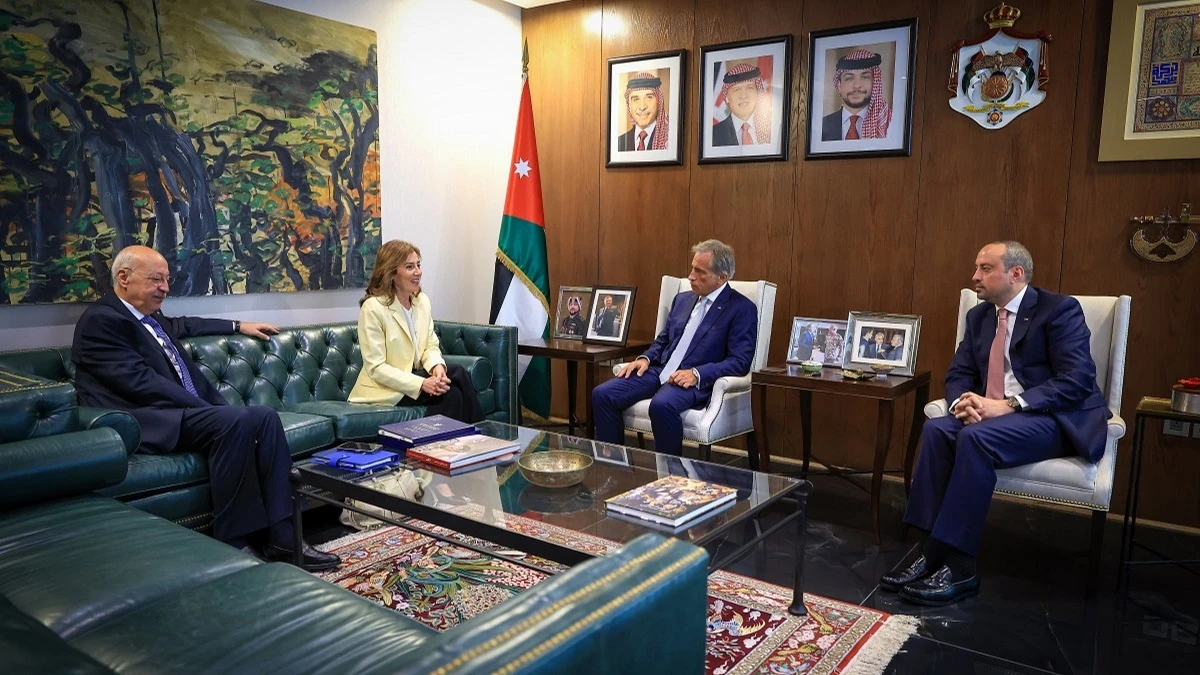
Amman – On Tuesday, February 17, 2026, the National Centre for Human Rights (NCHR) held a national dialogue session titled “Drugs and Their Impact on Family and Society in Jordan.” The event took place at the Landmark Hotel in Amman, under the patronage of the Chairwoman of the Board of Trustees, Ms. Samar Al-Hajj Hassan. The session saw the participation of the Commissioner General, Mr. Jamal Al-Shamayleh, alongside a group of dignitaries, representatives from judicial, security, and health authorities, civil society organizations, and specialized experts.
In her opening remarks, the Chairwoman of the Board of Trustees emphasized that the scourge of drugs represents a complex national challenge with intersecting security, health, social, and economic dimensions. She noted that this requires a holistic and sustainable approach based on early prevention, strict law enforcement, expanding the scope of treatment and rehabilitation, and enhancing community awareness to protect the Jordanian family and preserve the social fabric.
In turn, the Commissioner General stressed the importance of striking a balance between the requirements of combating drugs and human rights guarantees. He asserted that dealing with addiction cases must be based on a rights-based approach that promotes the right to health, ensures human dignity, and supports social reintegration programs for recovering individuals.
The sessions were moderated by the NCHR Commissioner for Promotion, Lawyer Nisreen Zriqat. The first session discussed the legal and security reality of drug proliferation in Jordan. Brigadier General Hassan Al-Qudah, Director of the Anti-Narcotics Department at the Public Security Directorate (PSD), reviewed the field reality of the spread, emerging patterns of usage and promotion, and security challenges related to the evolution of organized crime methods.
Senator Dr. Ammar Al-Qudah presented an analysis of the legislative framework governing drug control, emphasizing the importance of developing legal texts to achieve deterrence while simultaneously enhancing the reformative and therapeutic dimensions.
Brigadier General Mohammad Al-Thiabat, Director of the Jaber Border Center, addressed the role of specialized agencies in thwarting drug smuggling attempts through border crossings. He reviewed modern detection and inspection technologies and highlighted the importance of developing monitoring tools and fostering regional and international cooperation.
Mr. Tayel Al-Majali, Head of the National Anti-Narcotics Coalition, underscored the importance of partnership between security agencies and social institutions, and the activation of the national anti-narcotics strategy within an integrative framework that promotes both prevention and treatment.
In the second session, titled “Integration of Institutional Roles in Confronting Drugs: From Combat to Prevention,” Dr. Ahmed Al-Huneiti, Director of the National Center for Addiction Treatment at the Ministry of Health, spoke about the right to health in addiction cases. He reviewed treatment and rehabilitation services, existing challenges, and the necessity of expanding specialized programs to ensure affected groups have access to comprehensive therapeutic services.
Lt. Col. Yazan Al-Shaer, Head of the Addiction Treatment Center at the Public Security Directorate, reviewed mechanisms for handling cases and post-recovery follow-up programs, emphasizing the importance of integrating therapeutic efforts with family and community support.
Mr. Imad Al-Suhaiba, Director of the Juvenile and Protection Directorate at the Ministry of Social Development, discussed the specifics of dealing with juveniles. He highlighted the importance of adopting preventive and rehabilitative programs that cater to their age and psychosocial needs, while strengthening early protection mechanisms.
Dr. Mousa Al-Tarifi, President of the Jordanian Anti-Drugs Society, affirmed the vital role of civil society in spreading awareness and launching sustainable initiatives targeting families and youth to foster a culture of community prevention.
The sessions witnessed a clear emphasis on the importance of the national media’s role in fighting the drug scourge through professional, responsible discourse that raises awareness and keeps pace with evolving patterns of proliferation.
The dialogue session concluded with several recommendations, most notably: the necessity of establishing specialized treatment and rehabilitation centers for juveniles and women that respect age and gender privacy; updating legislation and technical tools to keep pace with the development of narcotic substances and modern promotion methods; and strengthening the partnership between official bodies and civil society institutions in the fields of prevention, treatment, and reintegration.
In conclusion, the seminar affirmed that confronting the drug scourge is a top national priority requiring combined official and societal efforts within a framework of the rule of law and respect for human rights. Participants stressed that protecting Jordan’s youth and enhancing societal immunity constitute a fundamental pillar in the state’s journey under the leadership of His Majesty King Abdullah II Ibn Al Hussein, who consistently affirms that the nation’s security, stability, and the preservation of its citizens’ dignity are a shared responsibility requiring organized institutional work and a firm national will.