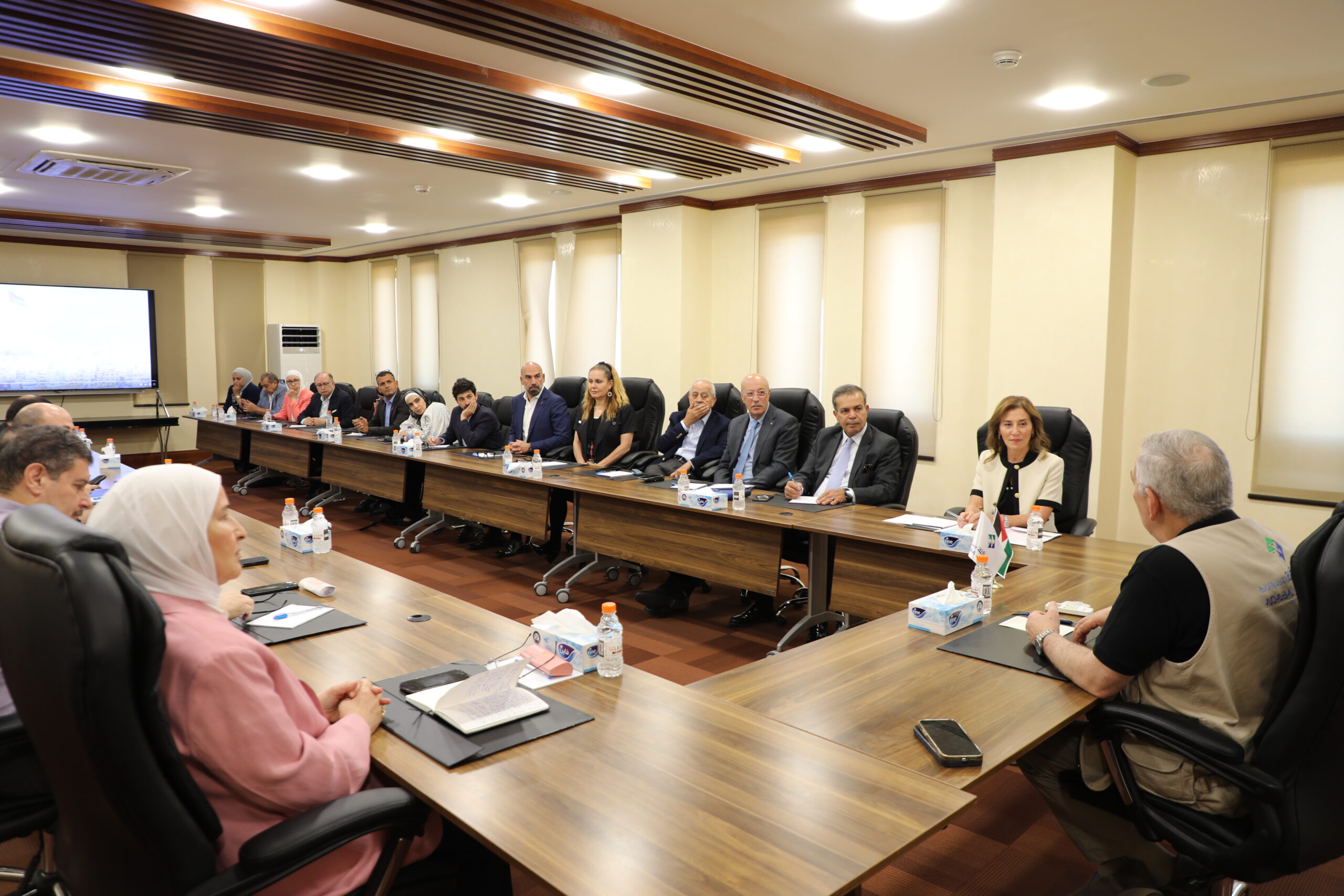
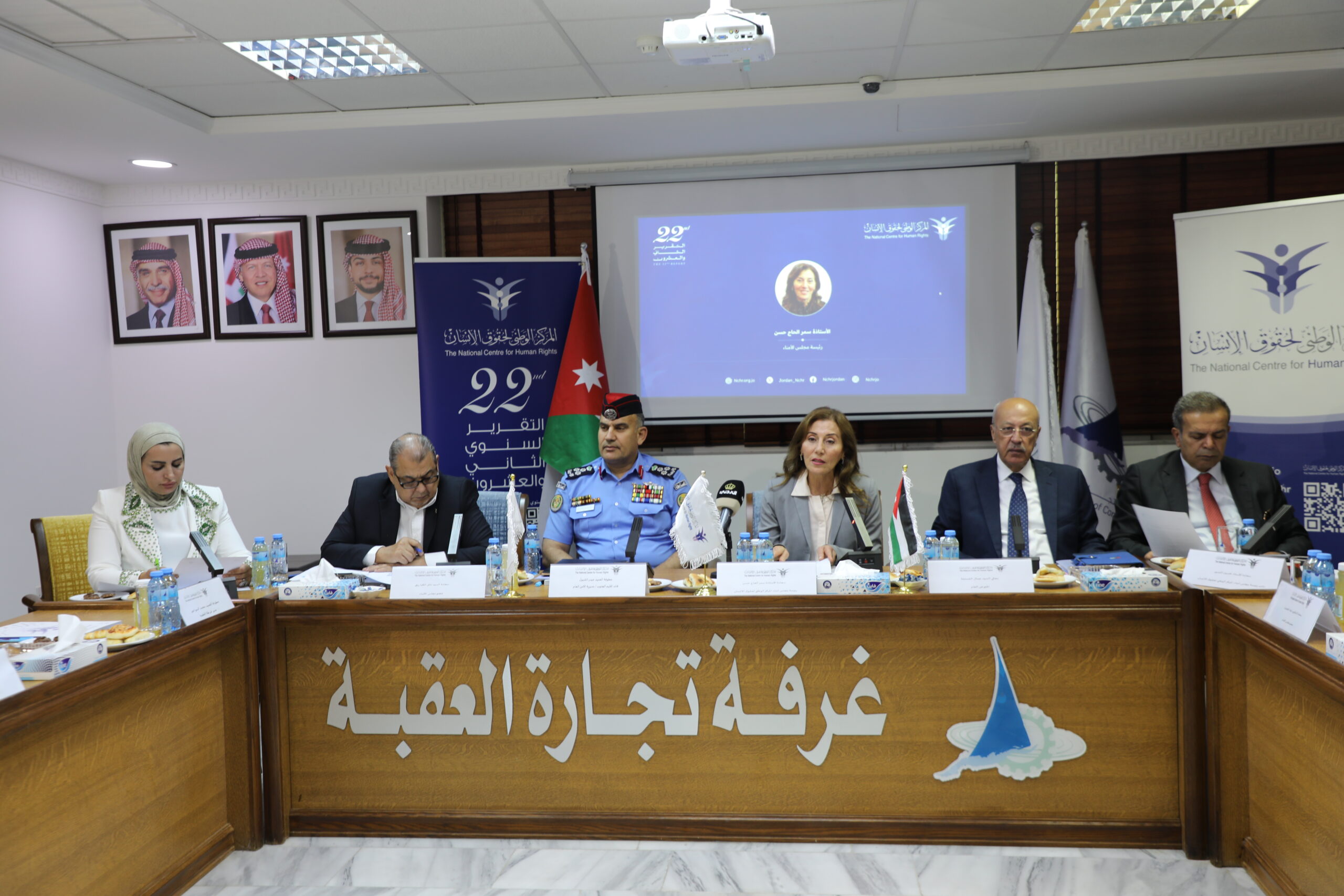
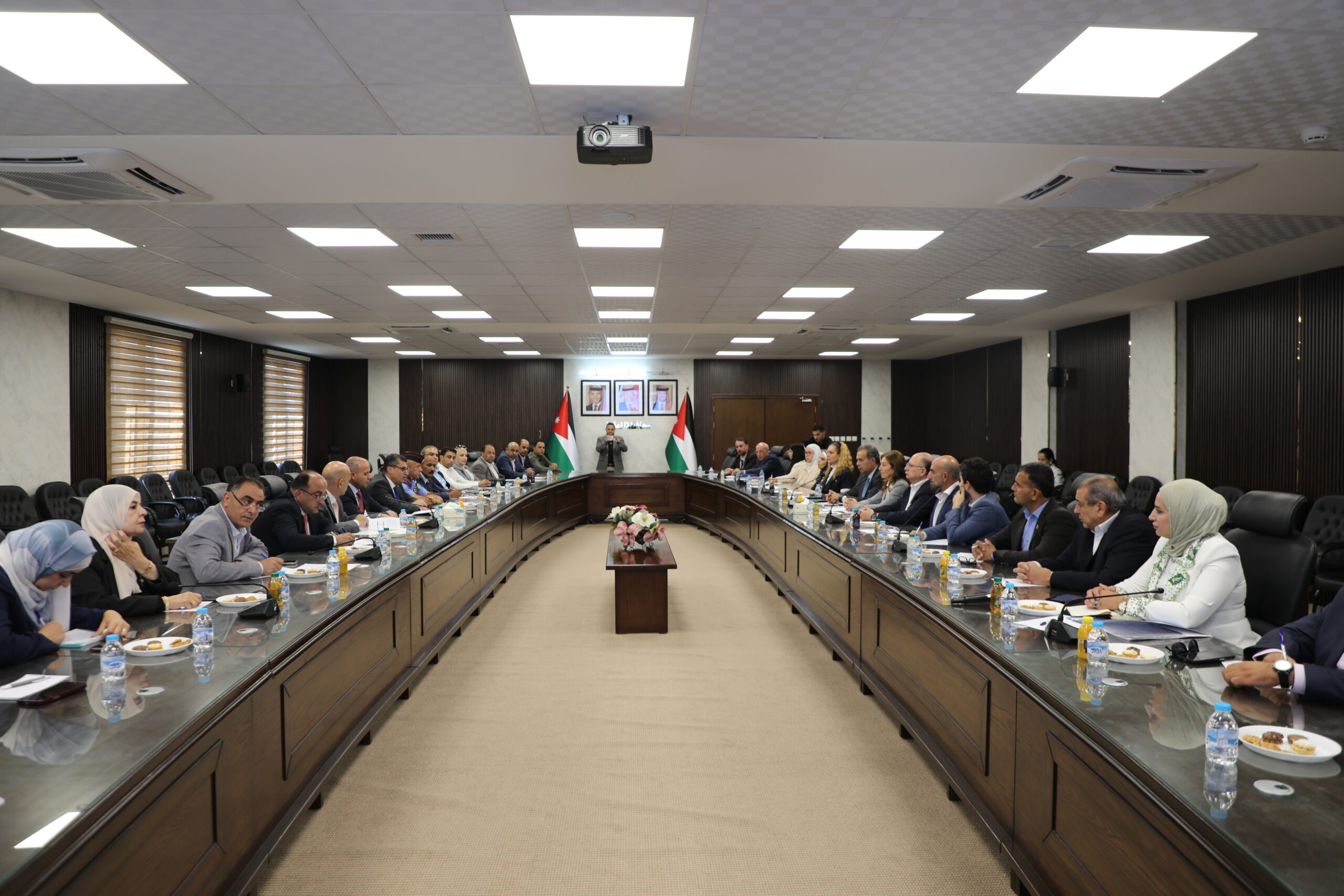
As part of its ongoing efforts to promote informed political participation among youth, the National Centre for Human Rights held a dialogue session at Aqaba University of Technology titled:
“Students and Political Party Life in Jordan: Towards Effective Youth Participation,”
with the participation of the University President, Prof. Mohammad Washah, the Dean of Student Affairs, Dr. Ahmad Al-Tarawneh, alongside academic and administrative staff, and more than 250 male and female students.
The session went beyond theoretical discussions, focusing on creating a direct dialogue space with students on the reality of political party engagement within universities and the challenges hindering their involvement.
In this context, Dr. Ahmad Al-Tarawneh, in his opening remarks, highlighted the importance of building student awareness grounded in participation, noting that universities represent a key environment for fostering a culture of dialogue and engagement in public affairs.
For her part, the Commissioner for Promotion at the Centre, Ms. Nasreen Zureikat, addressed the transformations witnessed in Jordan’s political system, linking the outcomes of the Royal Committee for the Modernisation of the Political System with the opportunities currently available to youth. She emphasized that the legislative framework has become more supportive of youth participation; however, the real challenge lies in effectively implementing this framework on the ground.
In turn, lawyer Rami Ahmad Al-Hashem, Head of the National Legislation Unit, focused on the legal framework governing political party work, explaining that the Political Parties Law No. (7) of 2022 represents a qualitative shift in empowering youth. However, he noted that it requires an enabling environment that ensures institutional neutrality within universities and safeguards the freedom of engagement without unjustified repercussions.
Additionally, lawyer Omar Bani Mustafa, Head of the Awareness and Training Unit, presented the Centre’s role in monitoring and promoting rights and freedoms, stressing that political participation is not a secondary option but a fundamental component of the human rights system.
Students’ interventions formed a central part of the session, where they openly expressed a range of concerns, most notably the continued cautious societal perception towards political party engagement, as well as concerns about the impact of political involvement on employment opportunities. This reflects a gap between legal frameworks and practical realities.
At the conclusion of the session, the Centre and the University exchanged commemorative shields, reaffirming the importance of partnership in enhancing human rights and political awareness within the university environment and supporting youth engagement in public life pathways.