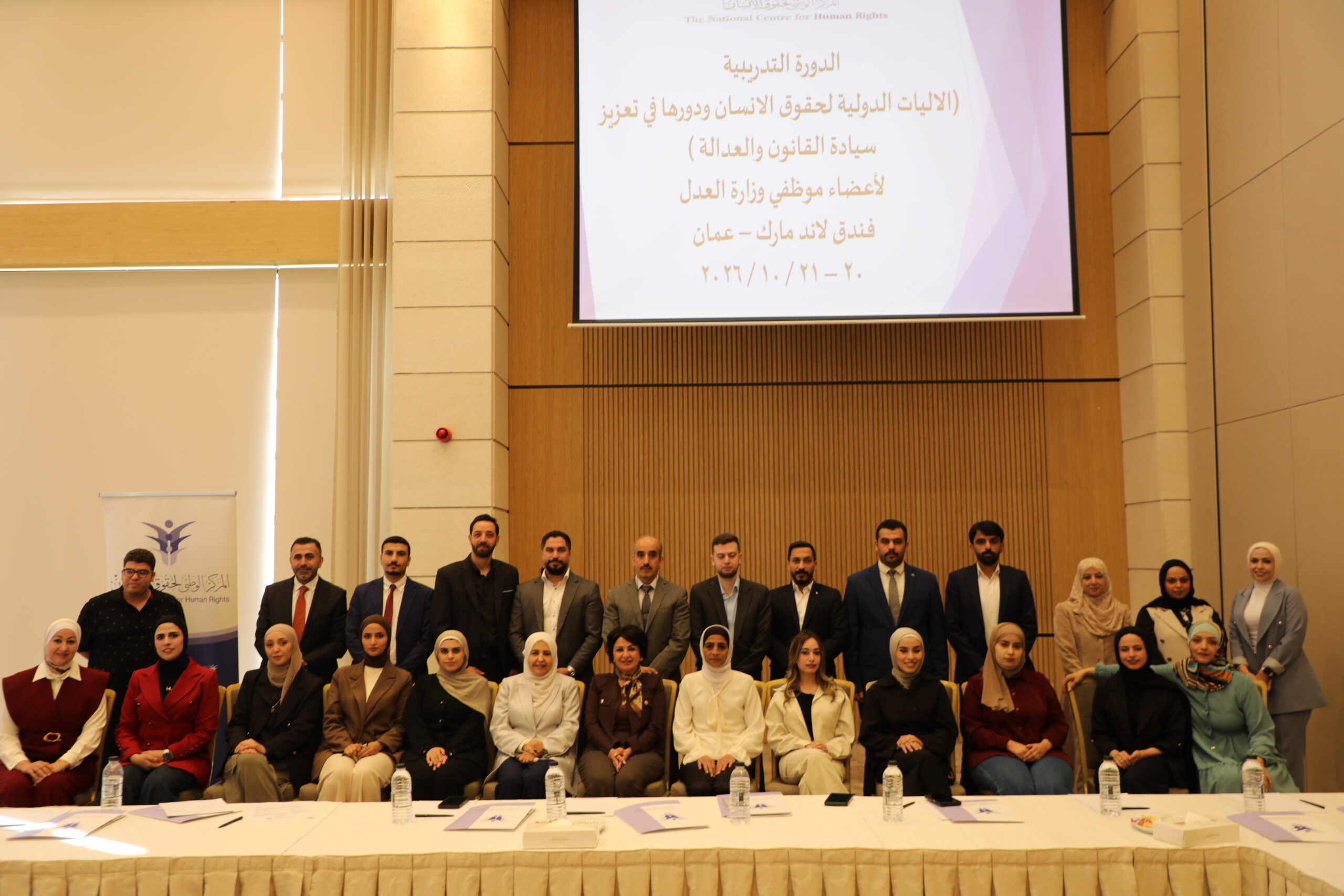
The National Centre for Human Rights launched, on Sunday, the second phase of training courses dedicated to members of the Government Coordination Team on Human Rights, in the presence of the Commissioner General of the National Centre for Human Rights, Mr. Jamal Al-Shamayleh, and the Government Coordinator for Human Rights, Mr. Moath Al-Momani, with wide participation from team members representing various official institutions.
These courses are held within the framework of ongoing institutional cooperation between the National Centre and the Government Coordination Team, with the aim of strengthening national capacities in the field of human rights, enhancing knowledge of international standards, and building a practical understanding of protection mechanisms, reporting processes, and the international obligations incumbent upon the Hashemite Kingdom of Jordan.
In his opening remarks, the Commissioner General, Mr. Jamal Al-Shamayleh, emphasized that organizing this training phase reflects the commitment of the Jordanian state—under the leadership of His Majesty King Abdullah II Ibn Al-Hussein, and with the support and follow-up of His Royal Highness Crown Prince Al-Hussein bin Abdullah II—to entrenching human rights principles, strengthening the rule of law, and building institutions capable of protecting rights and freedoms and safeguarding human dignity. He also highlighted the pivotal role played by the National Centre in monitoring, awareness-raising, and capacity building.
For his part, Mr. Al-Momani stressed the importance of these courses in enhancing coordination among government entities, unifying national efforts in engaging with international human rights mechanisms, and following up on the implementation of international recommendations, in a manner that reflects Jordan’s image as a state that respects its international obligations and continuously works to develop its human rights system.
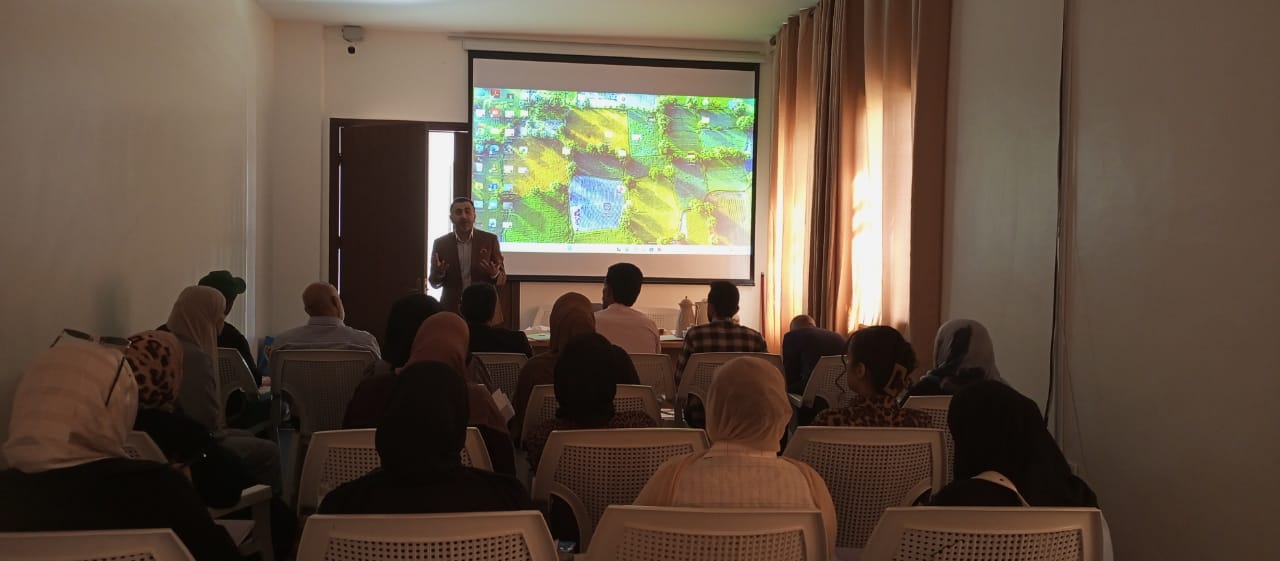
In the same context, lawyer Omar Bani Mustafa, Head of the Awareness and Training Unit at the Centre, noted that the second phase of the courses addresses a number of specialized topics, most notably international human rights mechanisms—both treaty-based and non-treaty-based—with a focus on the Universal Periodic Review (UPR), as well as the role of national and governmental institutions in preparing reports and following up on the implementation of recommendations. The programme also includes practical sessions and applied exercises aimed at linking theoretical aspects with practical realities.
The training activities witnessed notable interaction from participants, who affirmed the importance of these courses in developing their practical skills and enhancing their understanding of the nature of institutional human rights work, expressing their appreciation for the efforts of the National Centre in organizing specialized training programmes that meet the needs of governmental work in the field of human rights.
The National Centre for Human Rights affirms that these courses are part of a continuous series of training programmes targeting various national entities, stemming from its belief in the importance of capacity building, the dissemination of a human rights culture, and the strengthening of partnerships with official institutions in line with the Jordanian Constitution and relevant international standards.