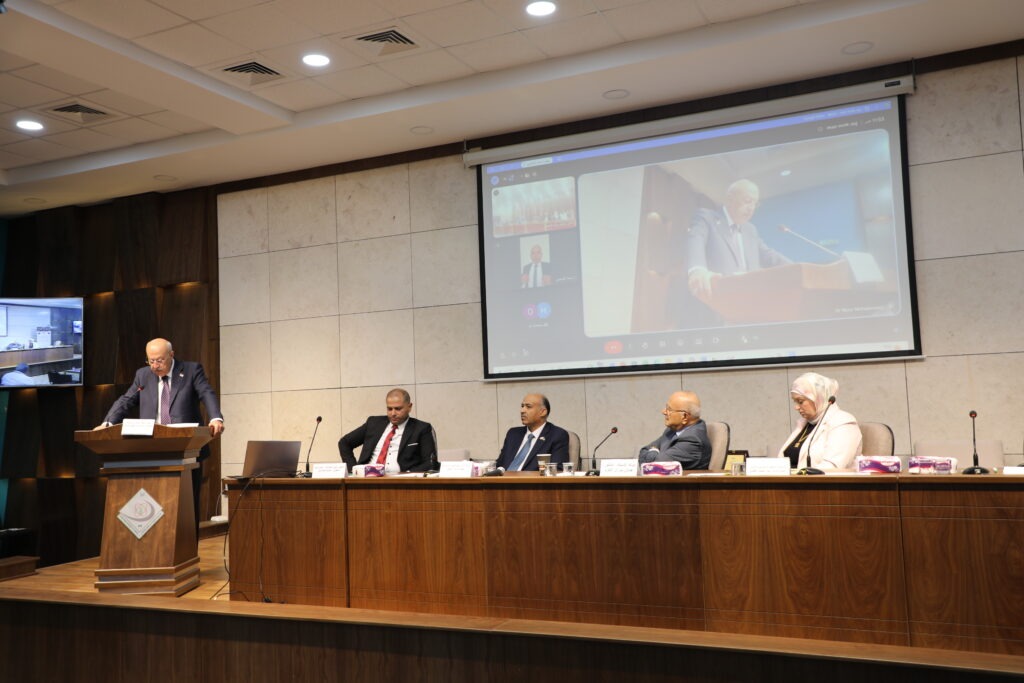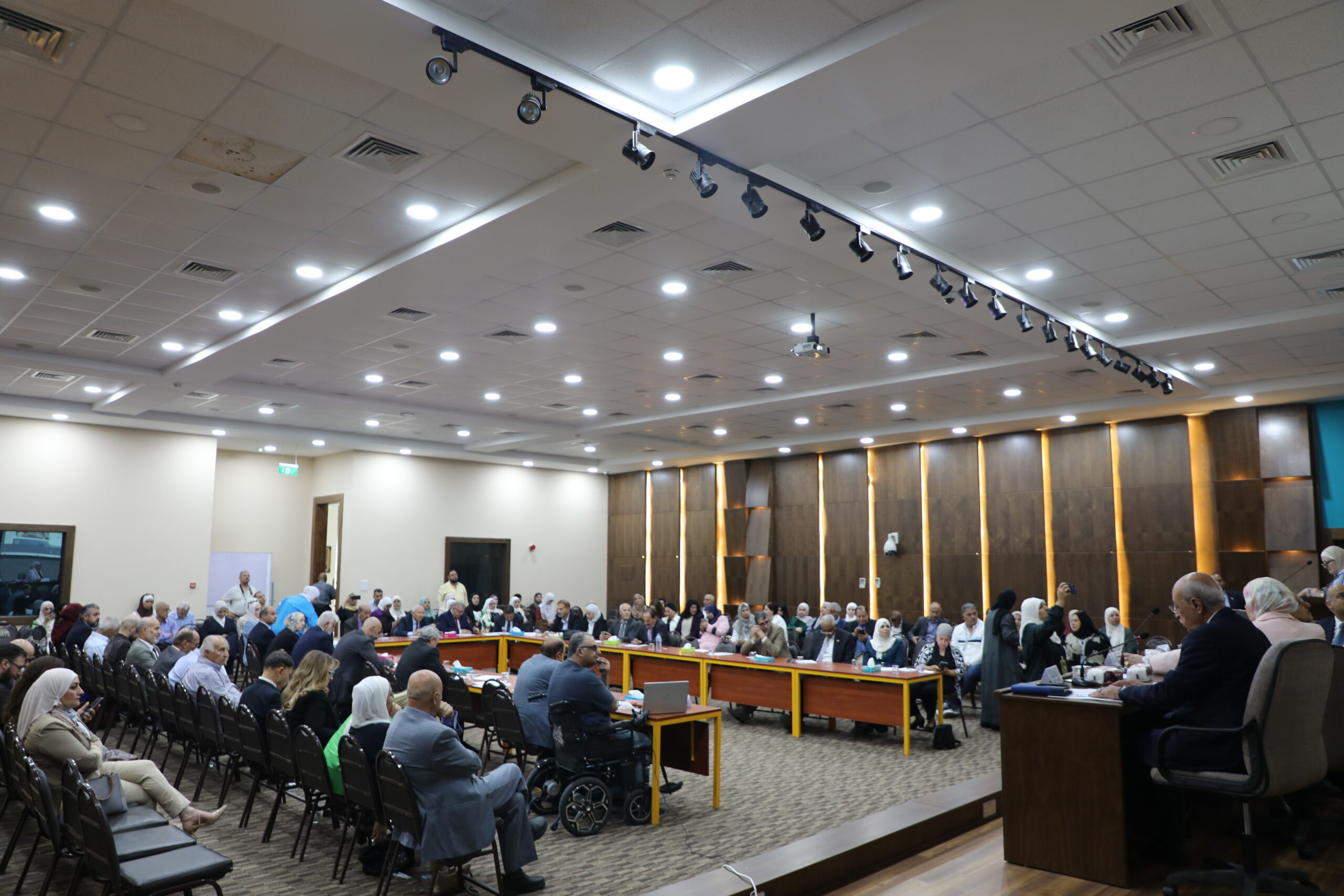
Amman – The National Centre for Human Rights (NCHR) participated in the hybrid international scientific conference entitled “Psychological Geology of Societies: Youth Potential and Rebuilding the Arab Value System,” held on Thursday, 27 August 2026, at the Islamic World Academy of Sciences. The conference was held under the patronage of Prof. Dr. Adnan Badran and organized by the BRC International Scientific Foundation in cooperation with the Islamic World Academy of Sciences and their partner scientific and academic institutions, under the theme “When the Roots Are Strong, the Peaks Remain Steady.”
The Centre’s participation in this scientific forum reflects its strategic commitment to promoting a culture of human rights among young people, one of the key pillars of its Strategic Plan for 2026–2030. The Plan places particular emphasis on developing comprehensive awareness-raising programmes targeting different age and social groups and strengthening the role of the media in disseminating human rights principles and fostering greater awareness of them.
Mr. Jamal Al-Shamayleh, Commissioner General for Human Rights, emphasized that young people are essential partners in building society and shaping its priorities, as well as in addressing the challenges arising from rapid economic, social, and technological transformations. He noted that the human rights framework affirms that young people, like all members of society, are entitled to fundamental rights and freedoms, foremost among them the rights to education, work, participation, access to information, and freedom of expression, as well as the rights to equal opportunities and non-discrimination and to meaningful participation in decisions that affect their present and future.
Mr. Al-Shamayleh emphasized that “promoting a culture of human rights among young people represents a genuine investment in society. Young people who understand their rights and responsibilities are better equipped to defend the rights of others and are more aware of the importance of the rule of law, respect for human dignity, and the rejection of hate speech, violence, and discrimination.”
The Centre’s remarks also highlighted the important role of the National Centre for Human Rights, as Jordan’s national human rights institution, in promoting and protecting human rights, fostering a culture of human rights, and raising awareness of rights and responsibilities throughout Jordanian society.
The Centre’s participation also forms part of its efforts to strengthen cooperation with government entities, academic institutions, and civil society organizations, ensuring greater coordination and complementarity in efforts to foster a culture of human rights and promote awareness across all segments of society, particularly young people, who represent both the present and the future of the Kingdom.